Oh my.
Where to start?
How about in 台北 (Taipei) 板橋 (Banqiao)? I met up with my language exchange partner… I mean, she actually got on the train I was taking from 中壢 (Zhongli) and off we went to… 台北, where I had to get off the train, run up the stairs, leave the station, run around the underground portion to the entrance and get on, all in less than 4 minutes, just because I had a monthly pass from 中壢 to 台北 and from 台北 onwards I needed to use my EasyCard.
Difficulties aside, we changed trains in 瑞芳 (Ruifang) and got on a local diesel train that disgorged us at 八斗子 (Badouzi) at about half-past eight.
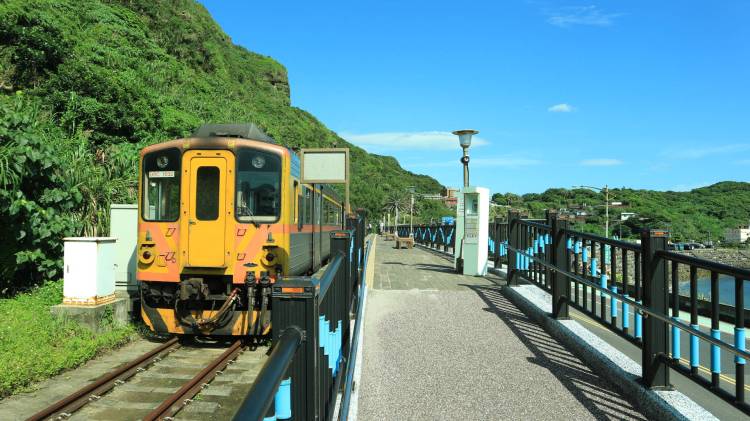
From then on we proceeded on foot. Well there was another train, a human-powered train to be exact (not the Flintstones style, though), that was scheduled to leave 八斗子 at 9:00, only to drop us off not far from our first goal, the Elephant Trunk Rock.
However, there were at least two problems with this mode of transportation. First, it had been all booked out on-line, so we would have to wait patiently for almost half an hour and hope someone would not show up.
Then, it was not exactly fast. The distance to 深澳車站 (Shen’ao station) it was supposed to cover in twenty minutes was barely over a kilometer, thus keeping in style with its human-powered source of locomotion.
Slap a $150 price tag on top and no wonder we decided to forego pedalling and, ironically enough, continued bi-pedalling. And thus the short trek to 深澳象鼻岩 (Shen’ao Elephant Trunk Rock) began.
First there was this cool mural in 深澳漁港 (Shen’ao Fishing Harbor). Click to zoom:

Then ladies with umbrellas:
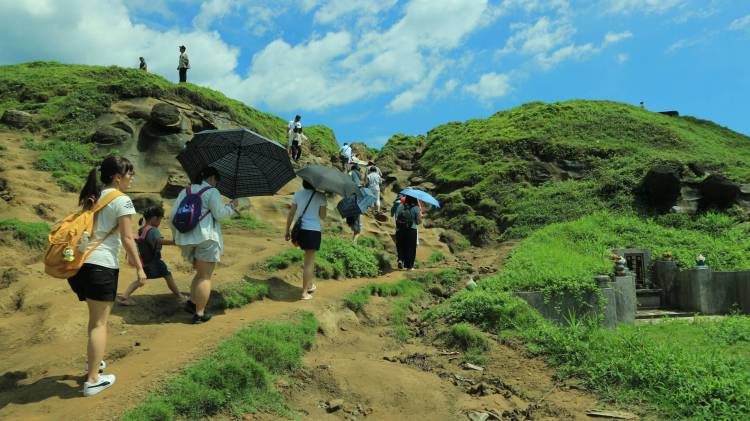
And elephant with a trunk!
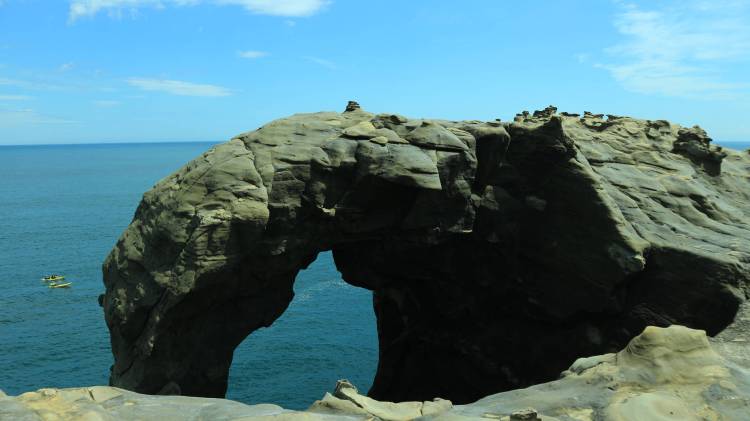
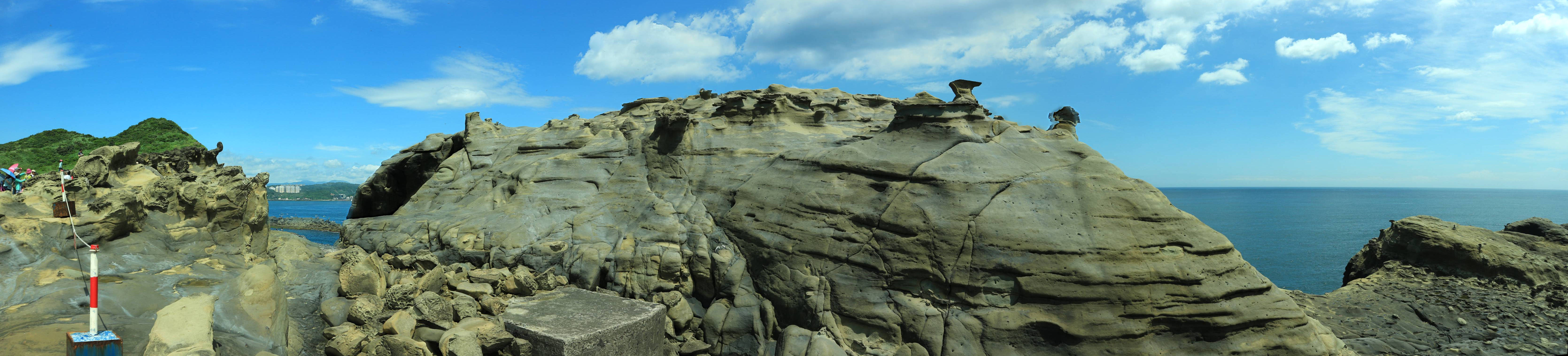
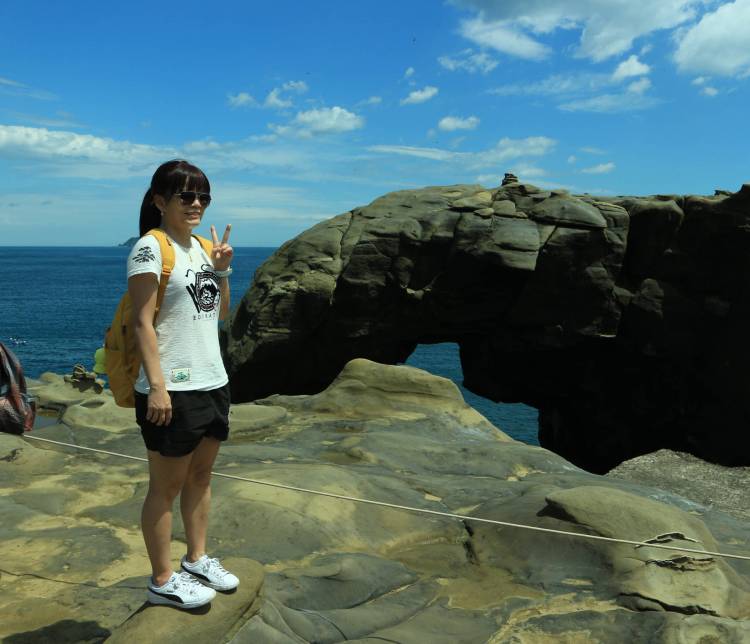
The whole rock was off limits, so unfortunately no selfie on top!
At least a picture in front of it:
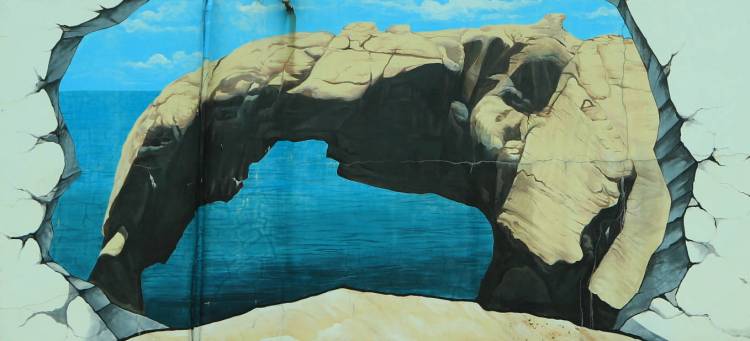
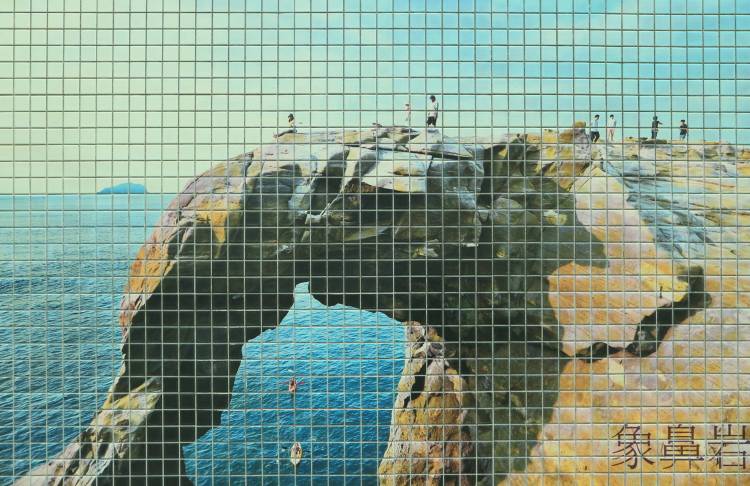
Murals of the said elephant abounded in the streets of 深澳 (Shen’ao):
Then we had two bowls of noodle soup with fried shark – the first time I have eaten shark in my life! Actually, it tasted like a run-of-the-mill stereotypical non-descript fish. Delicious, but not remarkable by any stretch of imagination.
Then we caught a T99 bus straight to 大武崙海灘 (Dawulun Beach).
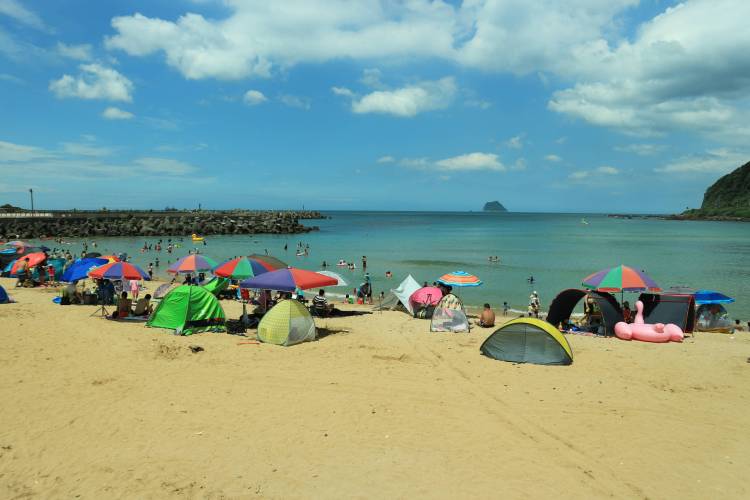
I bought American-style swimming trunks and off we went swimming. I felt some weird pricks in water but I thought I was just imagining things, because I did not see anything. The sea was quite shallow; some hundred meters from the beach the water was barely reaching up to my chest.
However, the pricking started to get more and more intensive here. I looked around. There was literally nothing, and the water was fairly clear at that:
‘I AM imagining things,’ I thought to myself.
“Do you feel the jellyfish?” suddenly Candice asked me. “Even the boy nearby was talking about it…”
Oh, so that’s what all the pricks were about!
“But I didn’t see any…” I feebly protested.
So I was not imagining things, after all. I did not know if I was expected to be afraid of it. Judging by how calm everyone else looked I decided to play my part, even though when I was young everyone was drilling in my head:
Jellyfish are DANGEROUS!
Time to get out of water and re-christen this beach to 水母海灘 – Jellyfish Beach. Yes, jellyfish in Chinese is – literally – water mother.
Next stop, 情人湖 (Lovers’ Lake):
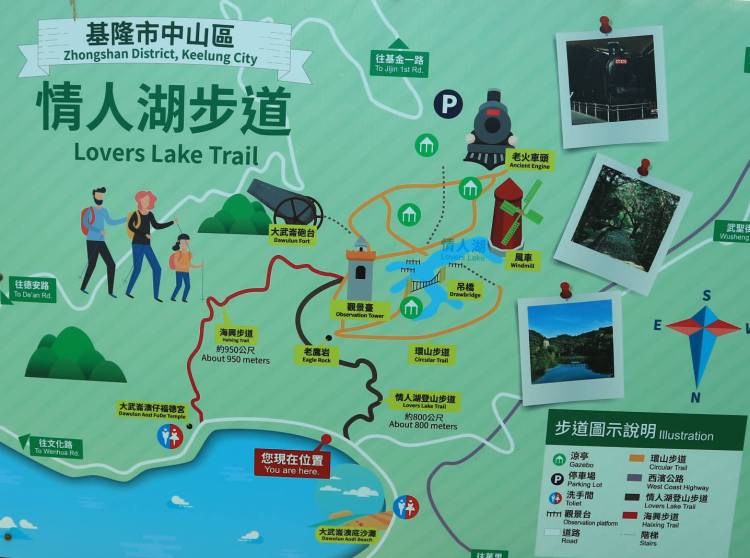
As we were working our way up the steep slope, we were afforded beautiful views of Dawulun Jellyfish Beach…
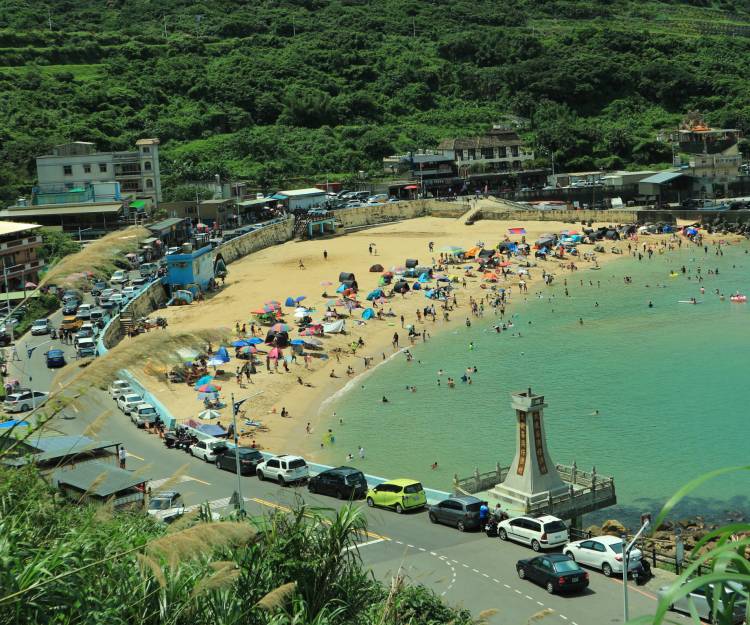
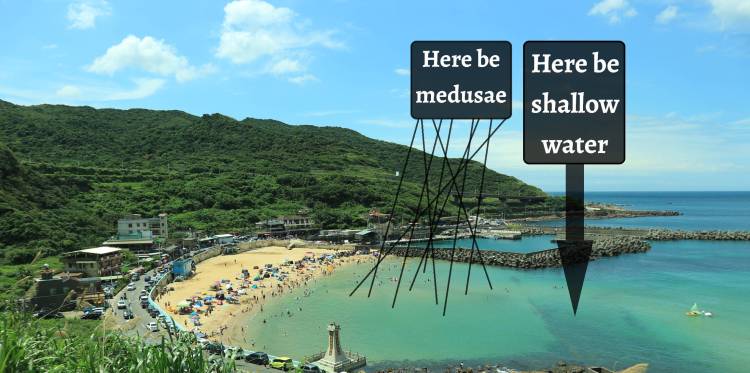
…and also of the trail:
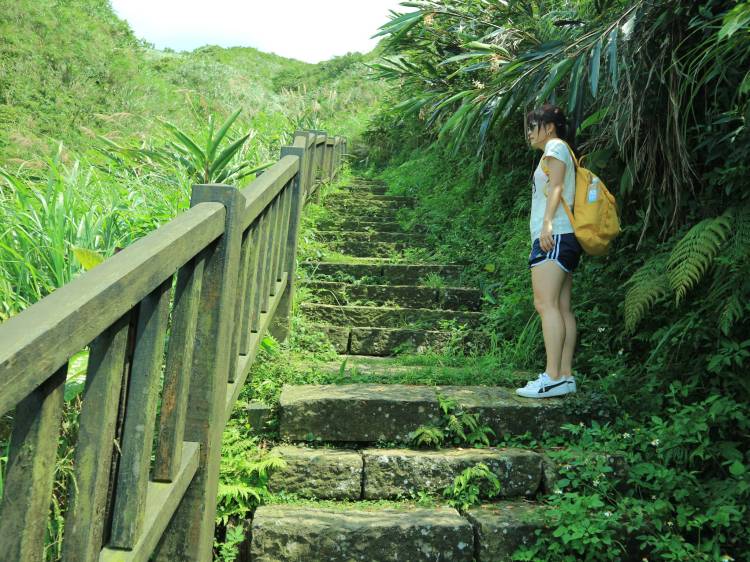
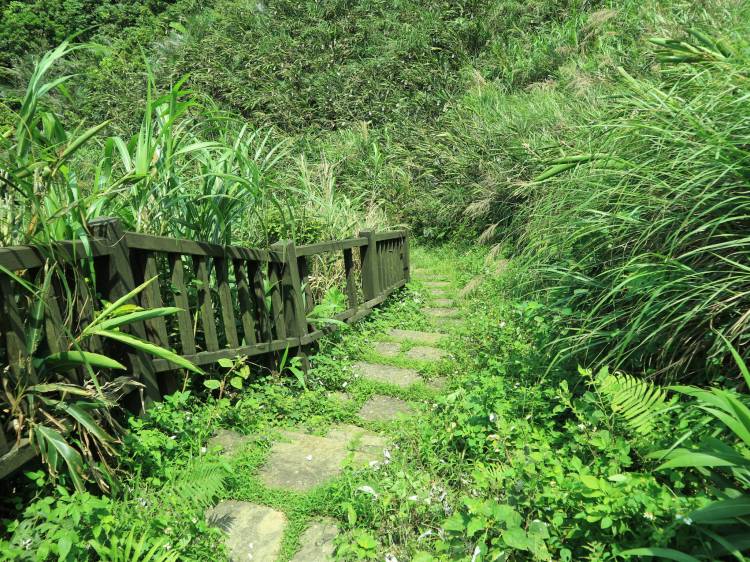
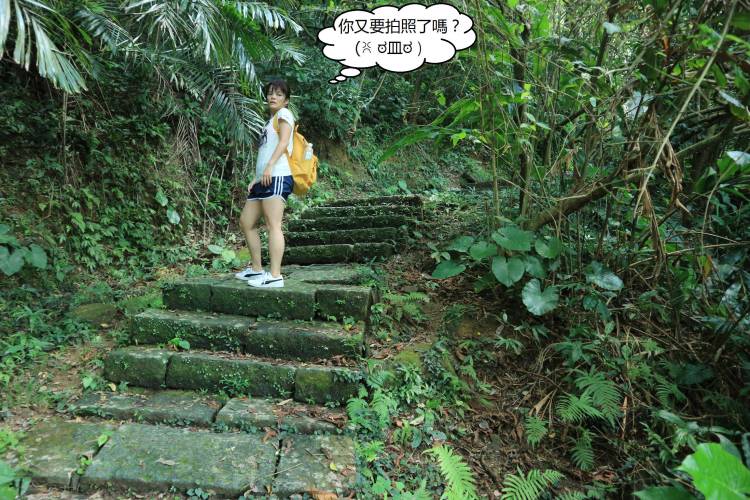
First thing I wanted to see once we reached the top was the 大武崙砲台 (Dawulun Fort).
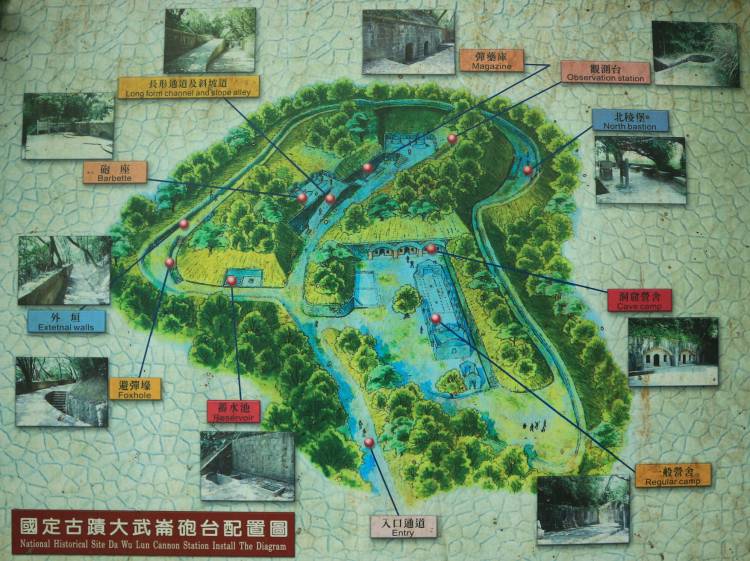
We found a trail leading to it and Candice asked one random retired lady:
“Is this the way to 大武崙砲台?”
She replied: “Yes, just take some 300 steps up 就到了。”
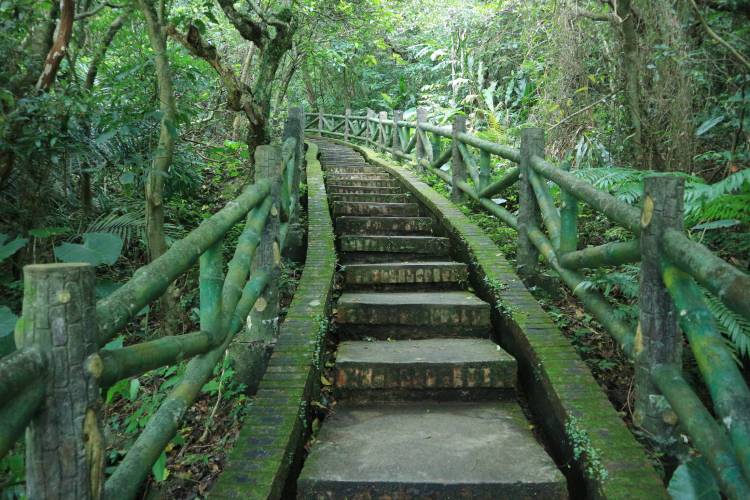
Candice translated it to me and I wondered why she was so particular with the number; we didn’t even ask how far it was. But since the sun was draining my energy (and I was being spiteful) I made a resolve to sue the old lady even if it’s one step more (i.e. 301). Or if it’s too few; I would then sue her for disseminating fake news.
So we counted the steps…
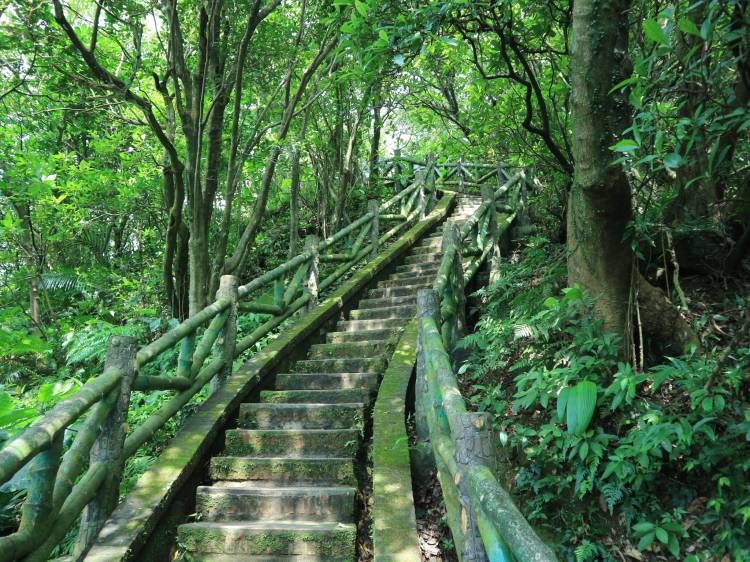
…and I was being sure of my impending court victory when we suddenly reached the top and the step counter stopped at 兩百九十六!That’s 296. Damn the lady was spot-on!!! How could a random passer-by know the exact number of steps on a random trail?
Oh. I know. Glitch in The Matrix.
As I was basking in the sun’s rays my humiliating defeat, I was at least once again consoled by the view:
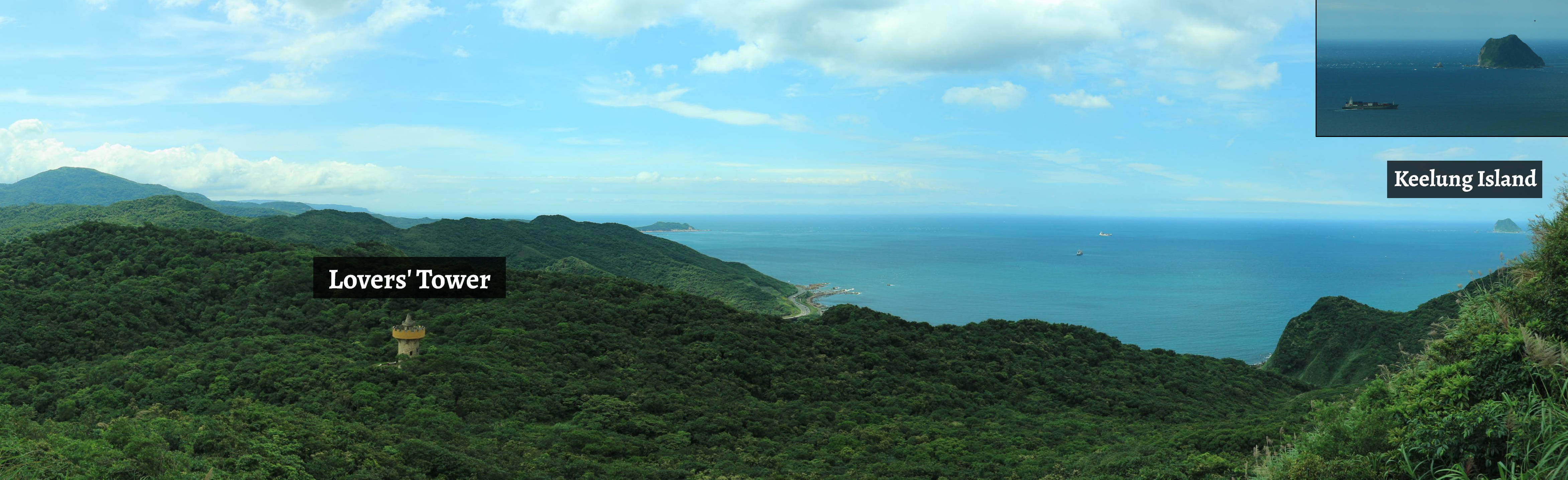
In any case, here’s the fort:
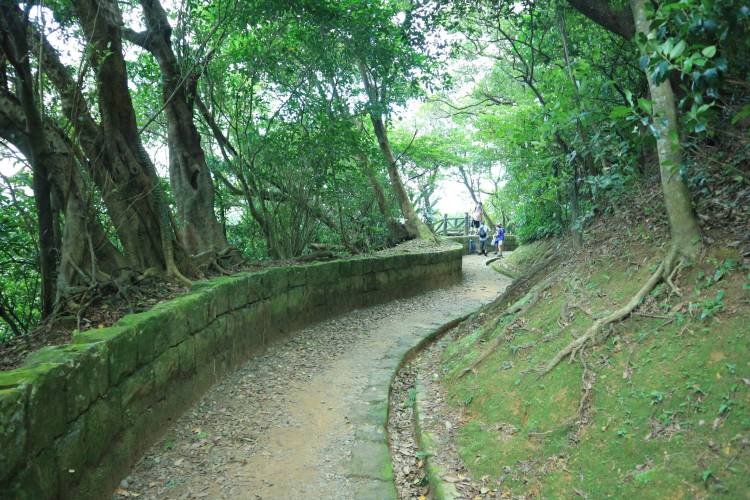
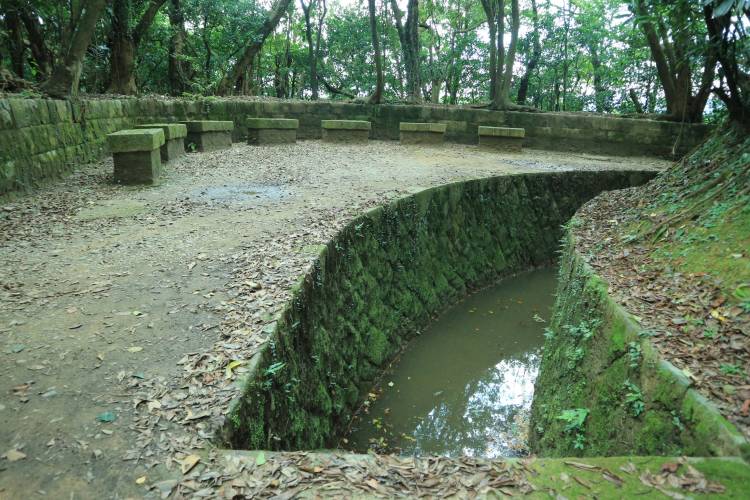
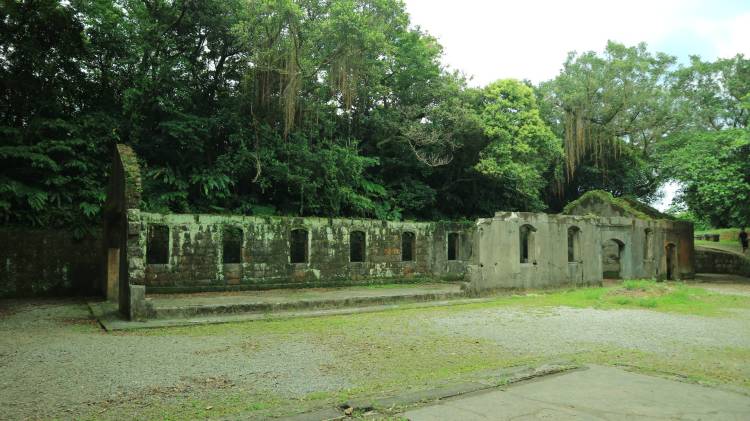

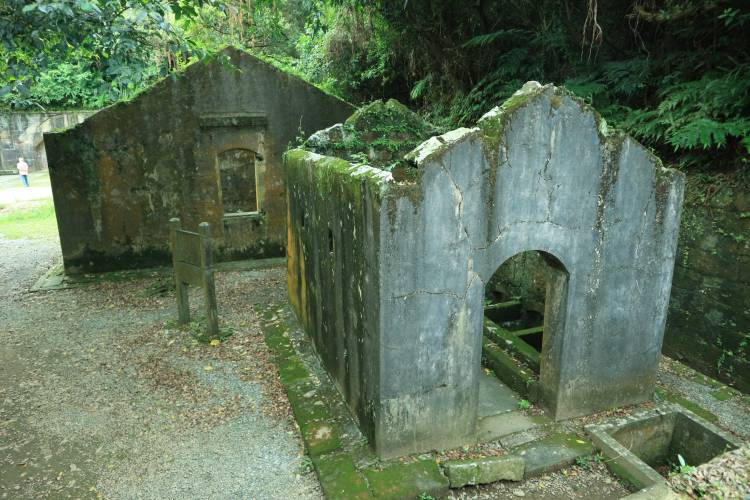
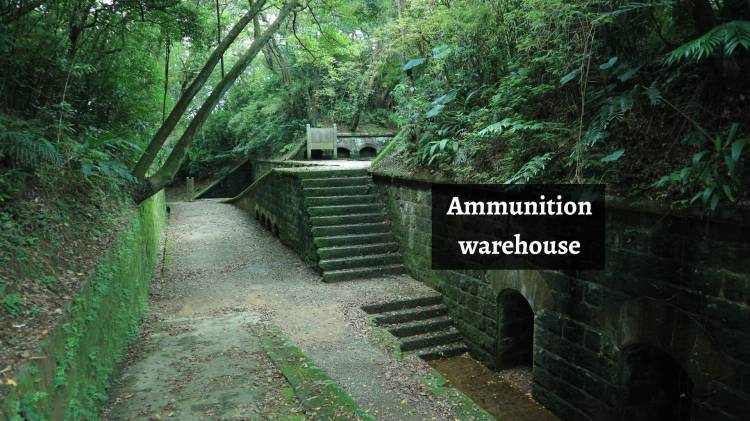
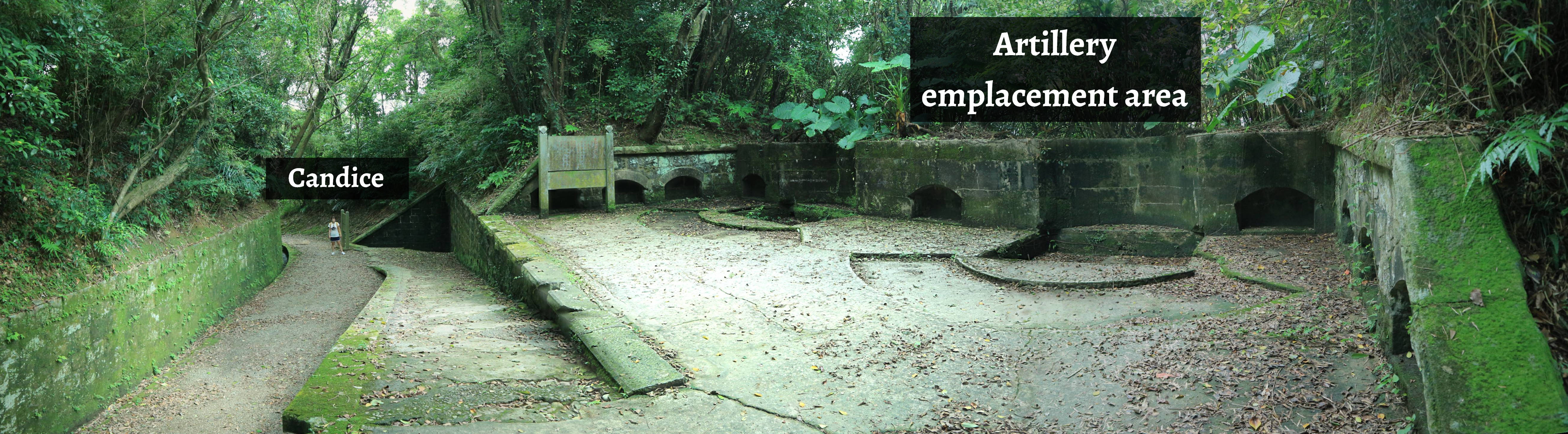
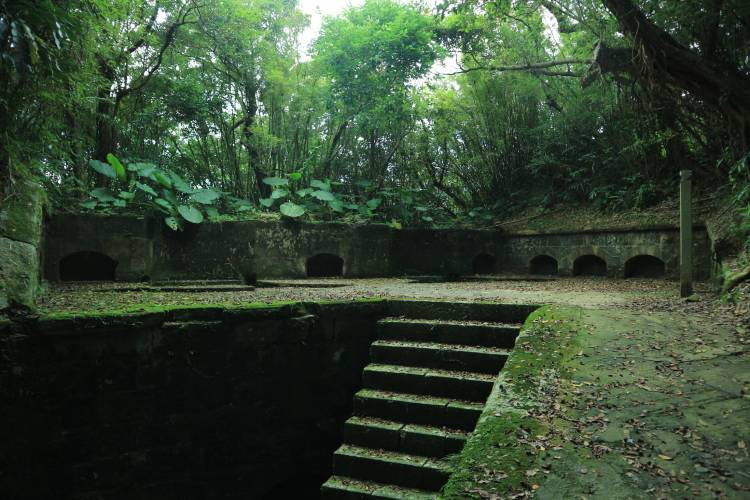
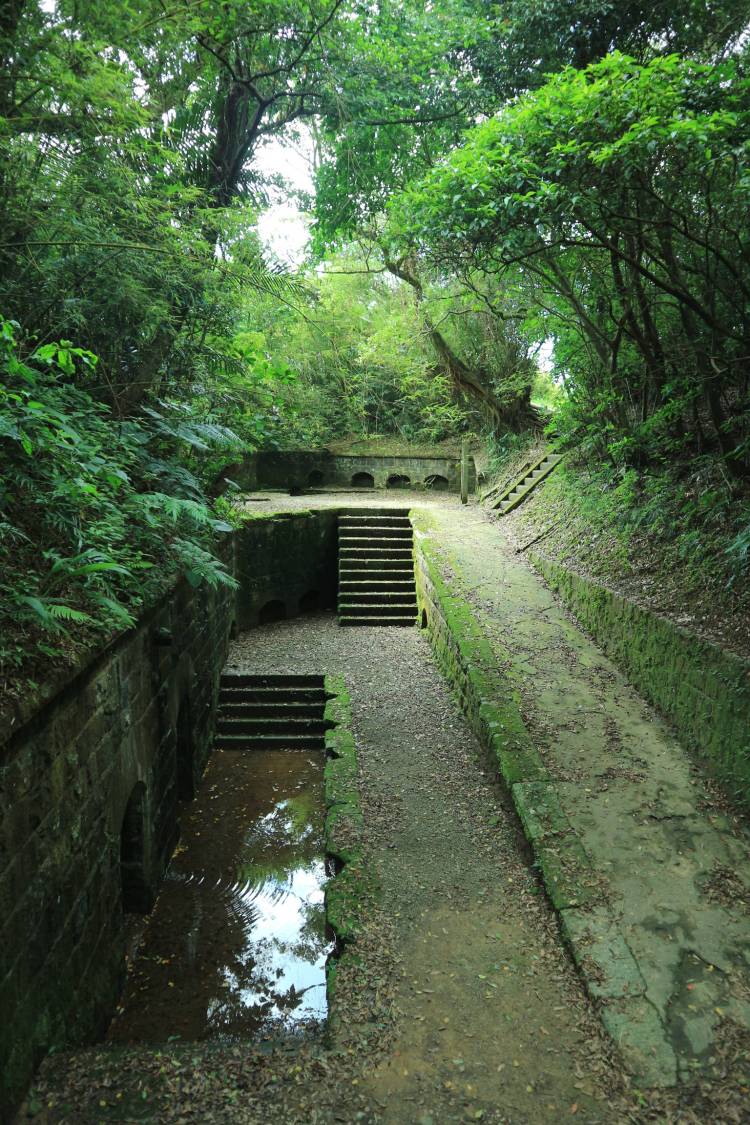
The stairs on the right lead to a round observatory (about 1.5m in diameter), piled up by rocks for observation of bomb landing and enemy movement:
I wanted to relieve myself here but as soon as I took out my tool I spotted a… tiny little kitten! However, she quickly backed off into the jungle. What was she doing here?
We went round the whole fort and discovered this painfully manicured entrance road from the parking lot:
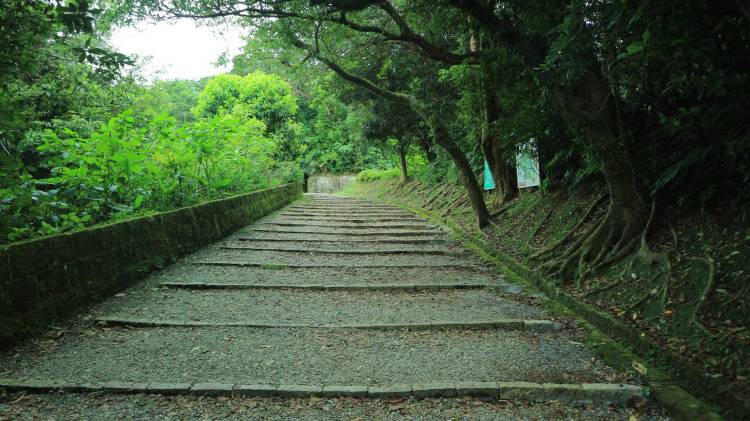
Then we returned the same way, i.e. descended 296 steps, and headed towards the 情人湖 (Lovers’ Lake).
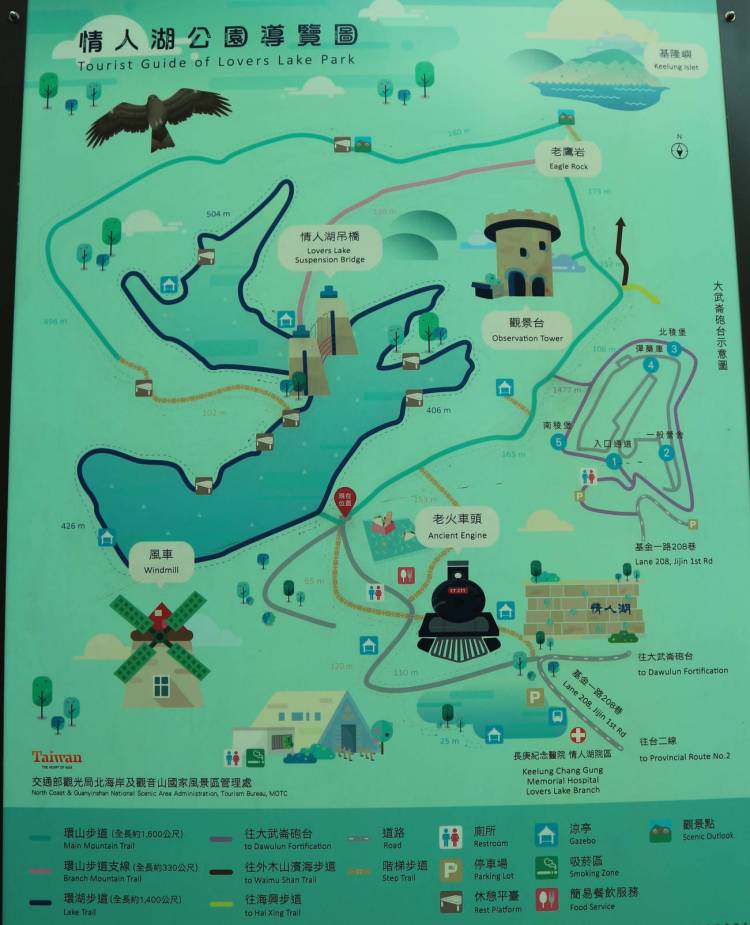
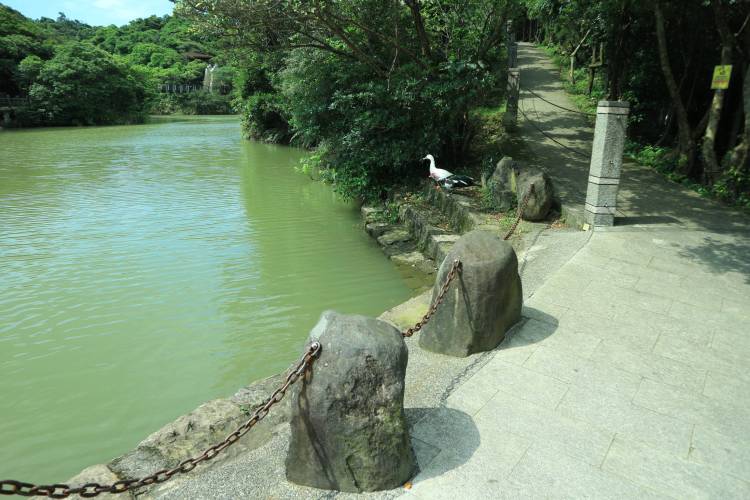
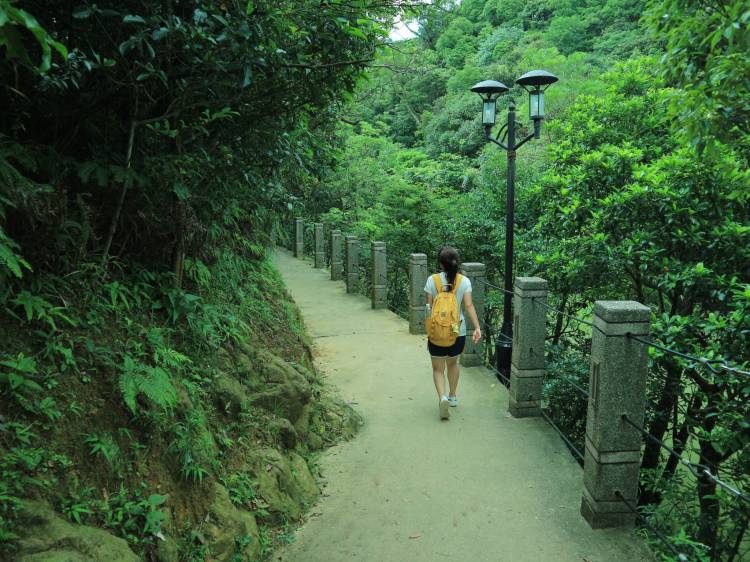
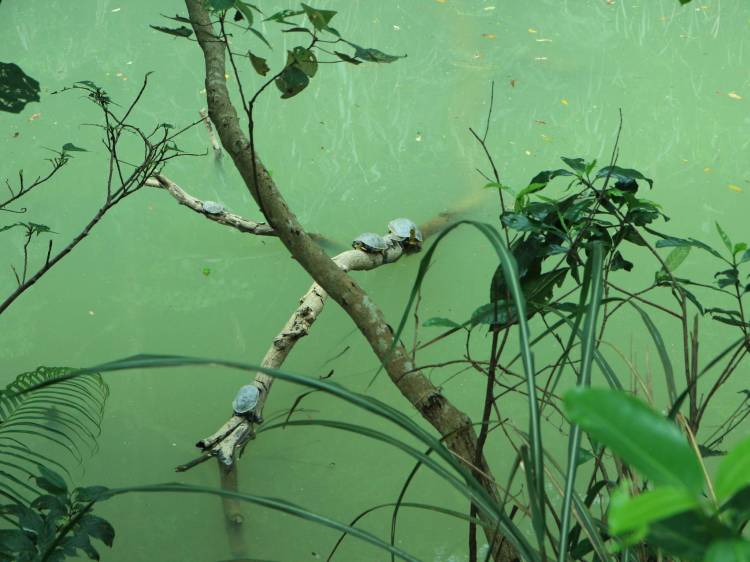
Or perhaps a 情龜湖 (Turtle Lovers’ Lake)?
After crossing the 情人湖吊橋 (Lovers’ Lake suspension bridge)…
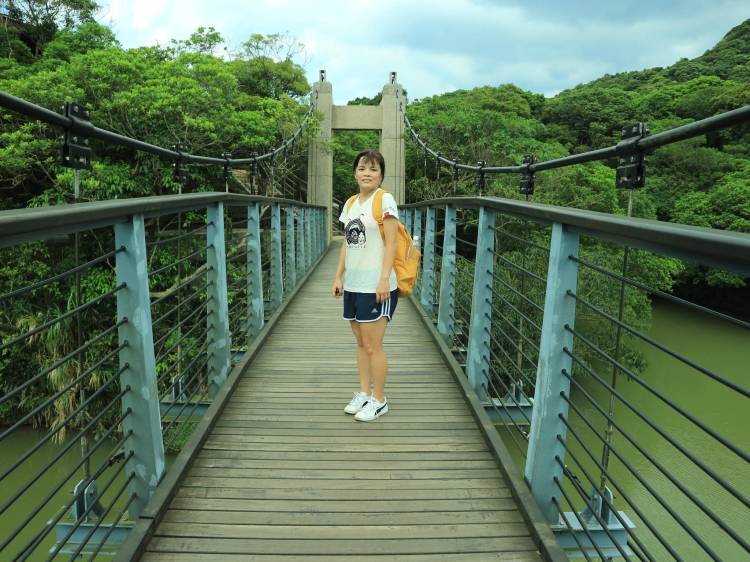
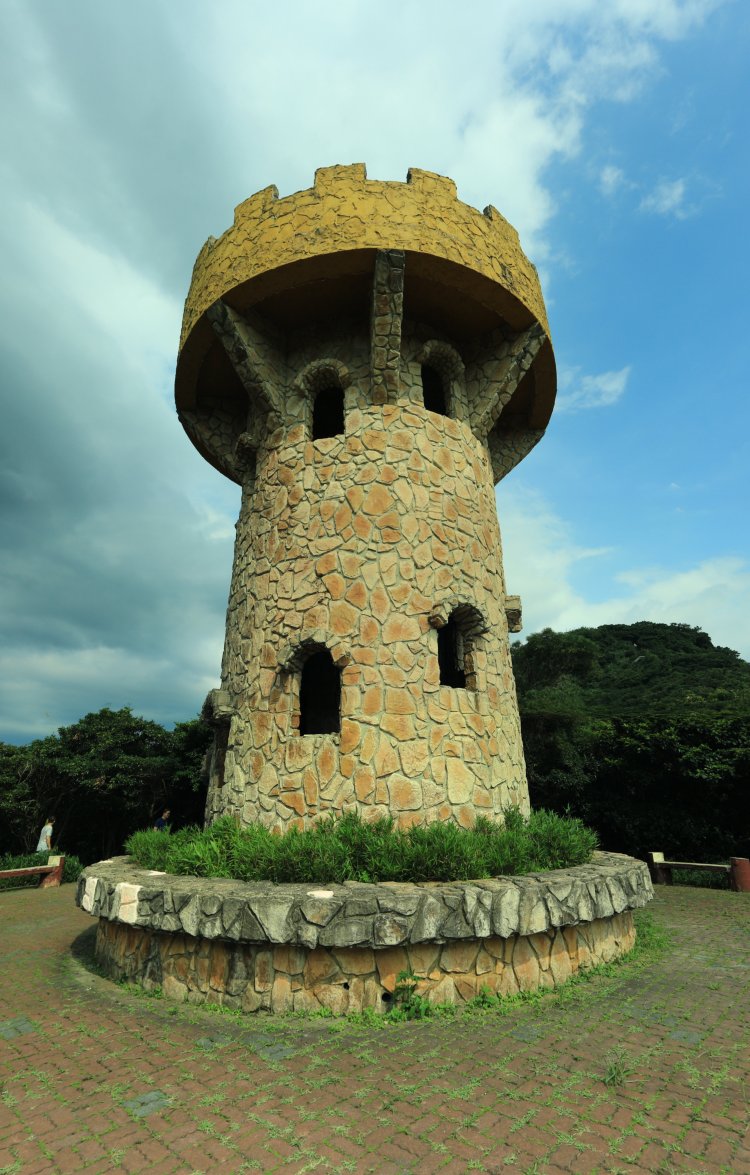
…we carried on to the 觀景台 (observation platform) a.k.a. 情人塔 (Lovers’ Tower). Yes, everything is Lovers’ here, even public toilet!
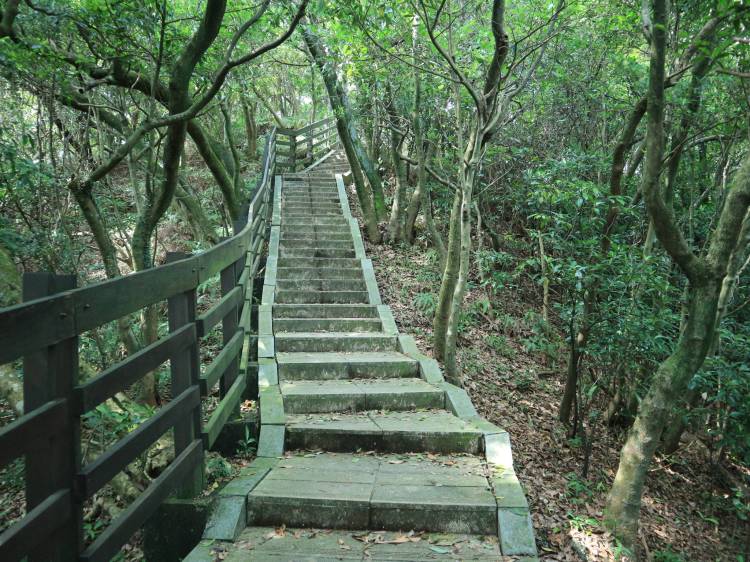
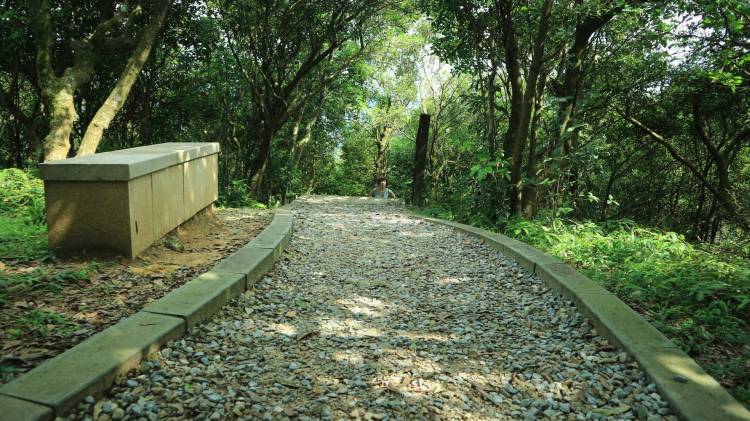

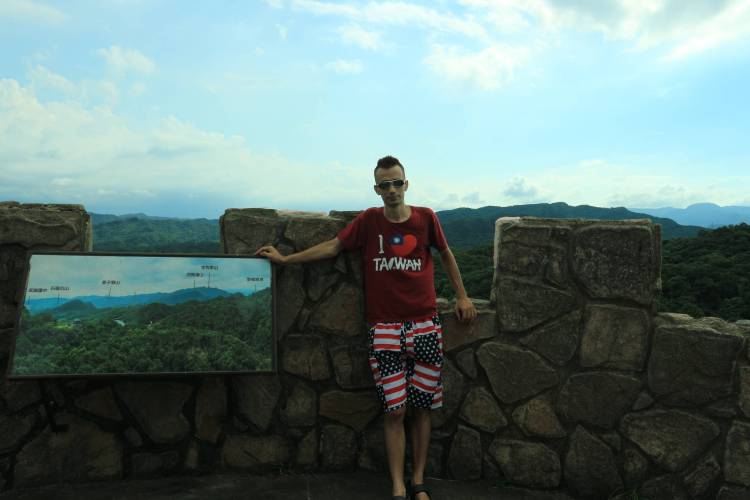
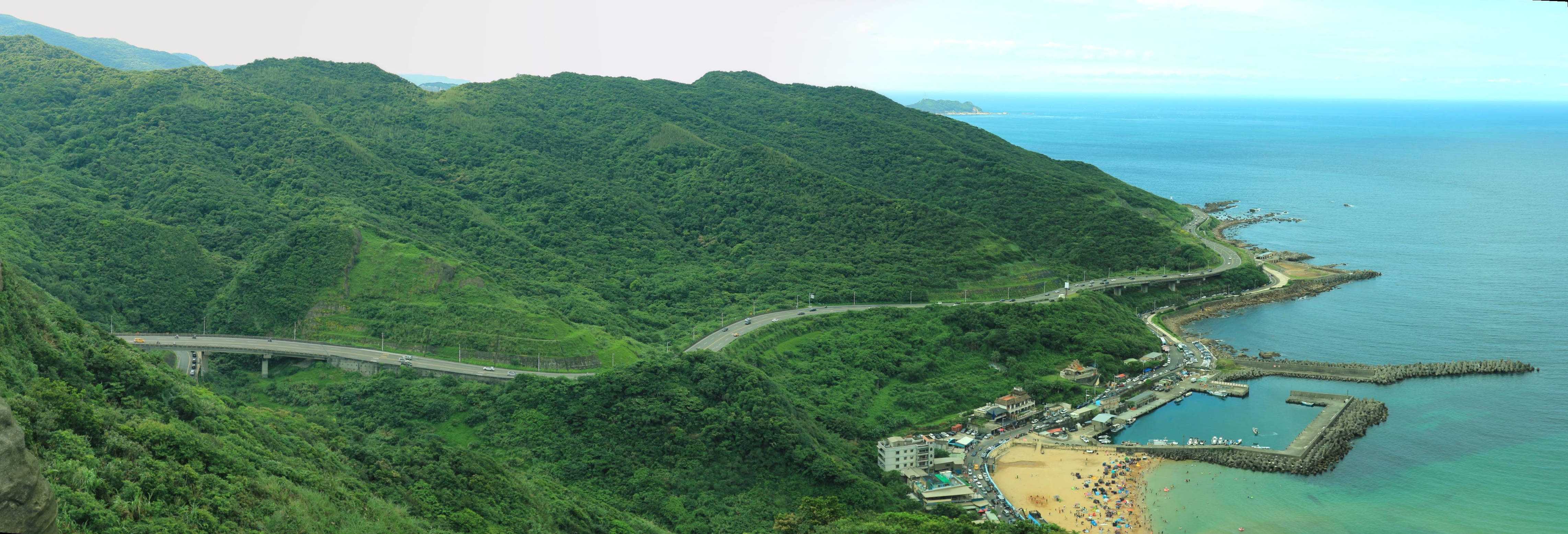
Come to think of it, not the best outfit to visit China. We were offered some nice views of the coastal highway…
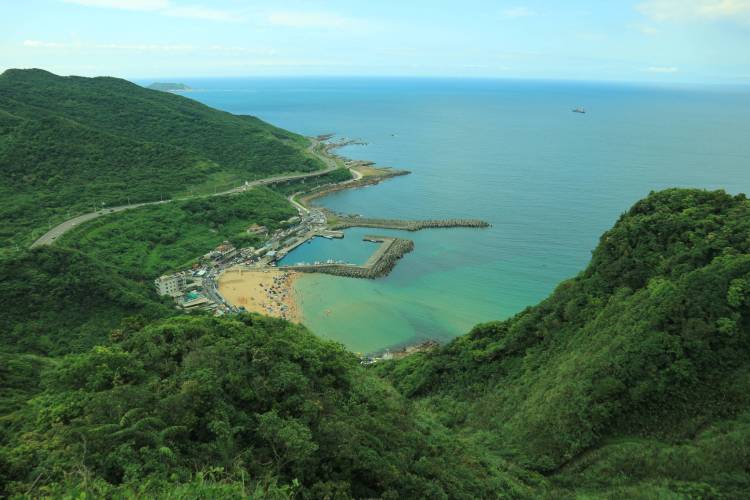
…or of the (by now notoriously infamous) Jellyfish Beach:
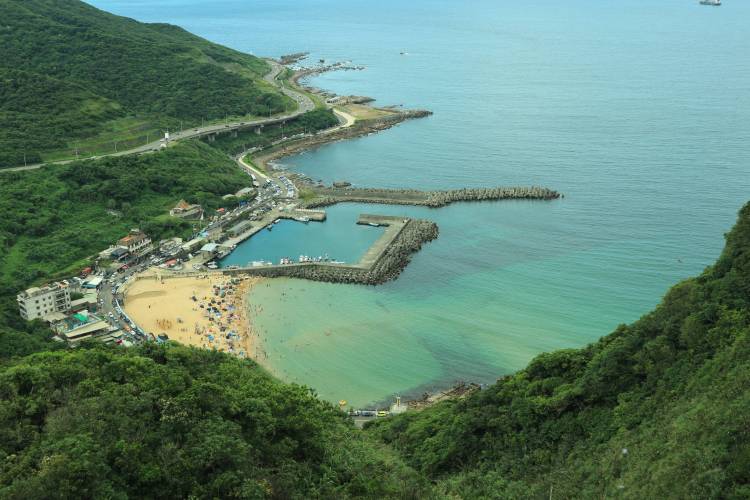

After a quick descent…
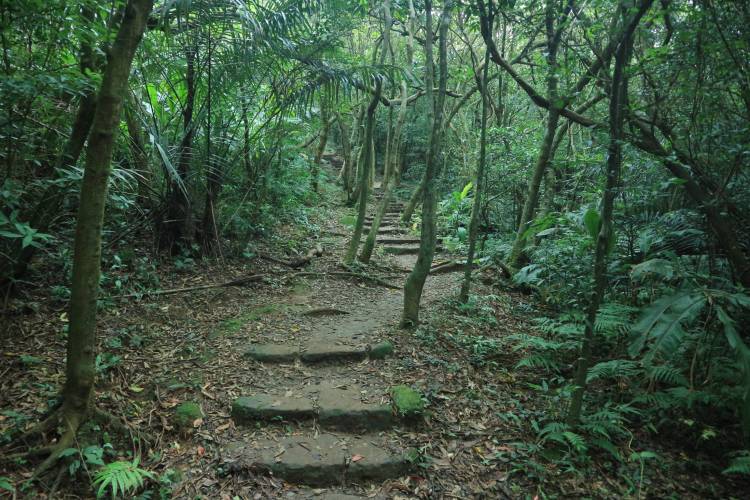
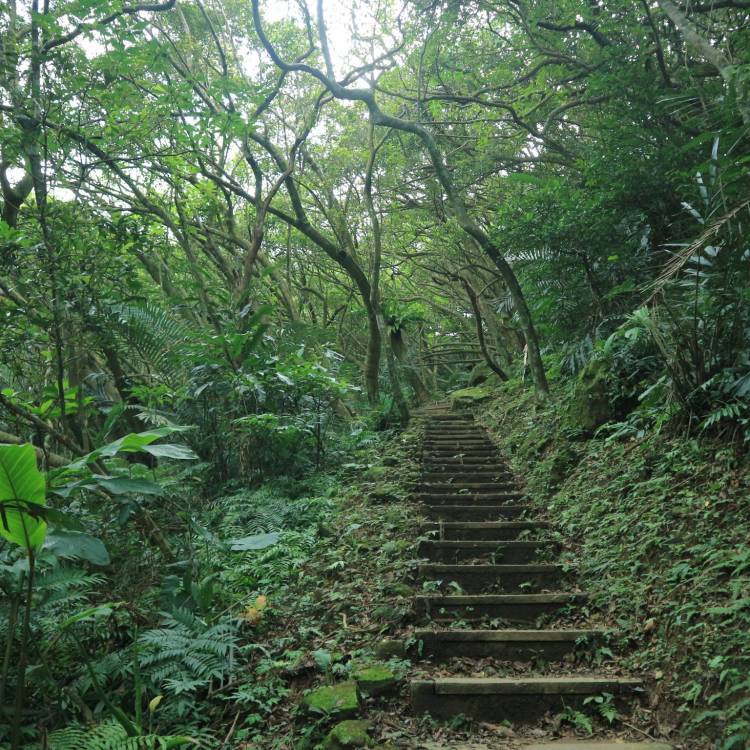
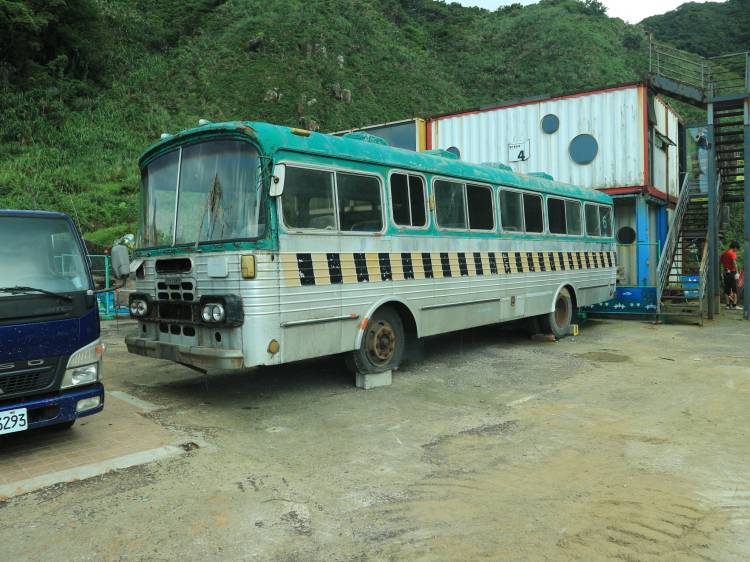
…past an old bus…
…we waved one last good-bye to all the invisible jellyfish…
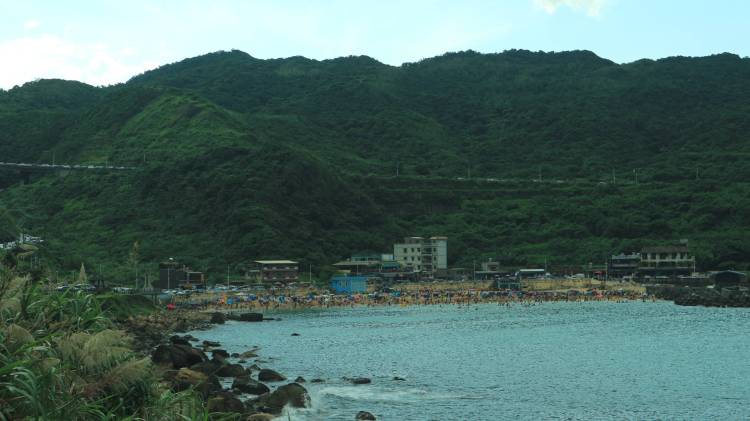
…and waited for a due-to-the-heavy-traffic-unusually-delayed bus to 基隆 (Keelung), where Candice showed me the local night market. It was massive and jam-packed chock-full of people already at five o’clock!
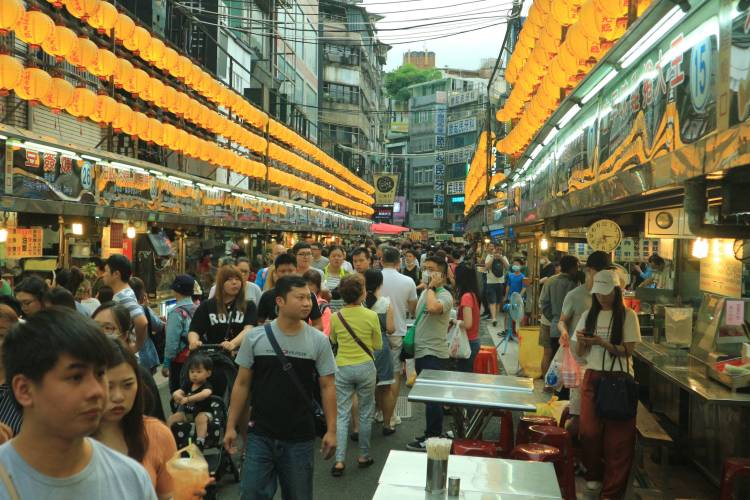
It was not just one street but several criss-crossing blocks and we could barely move at a snail’s pace, mostly we were just flowing with the crowd like trapped in a huge river of people.
Candice aimed for a local sandwich. The stall was so popular that they had an electronic ticketing system and our number was in the 85th position down the queue! The waiting screen is showing no. 466; ours was 490, picked up when they were serving no. 405:
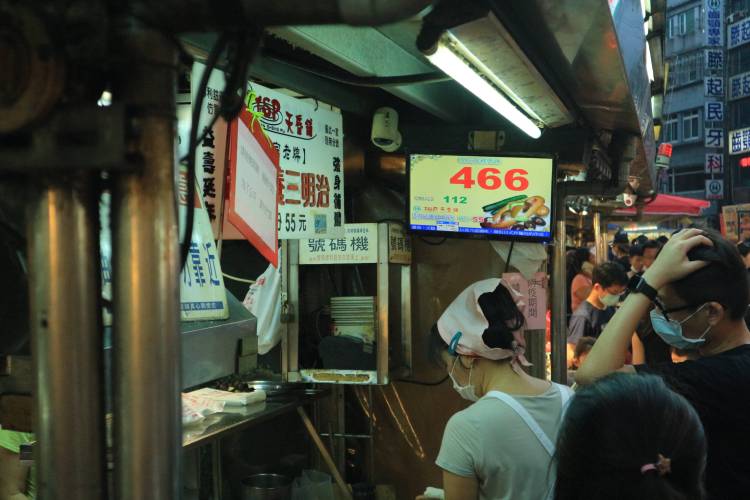
This is what I am talking about. South-east Asians in general are not greedy; they rather find other ways of managing business than raising prices to match the demand.
After realizing the sandwich Candice had recommended was fried and liberally smeared with mayo, I lost all appetite and helped myself to other delicacies, like a vegetable roll or chocolate nutella cake.
According to the weather forecast, there should have been a massive thunderstorm around noon. It was almost six and only the first drops of rain started to fall as we made our way to 基隆火車站 (Keelung railway station).
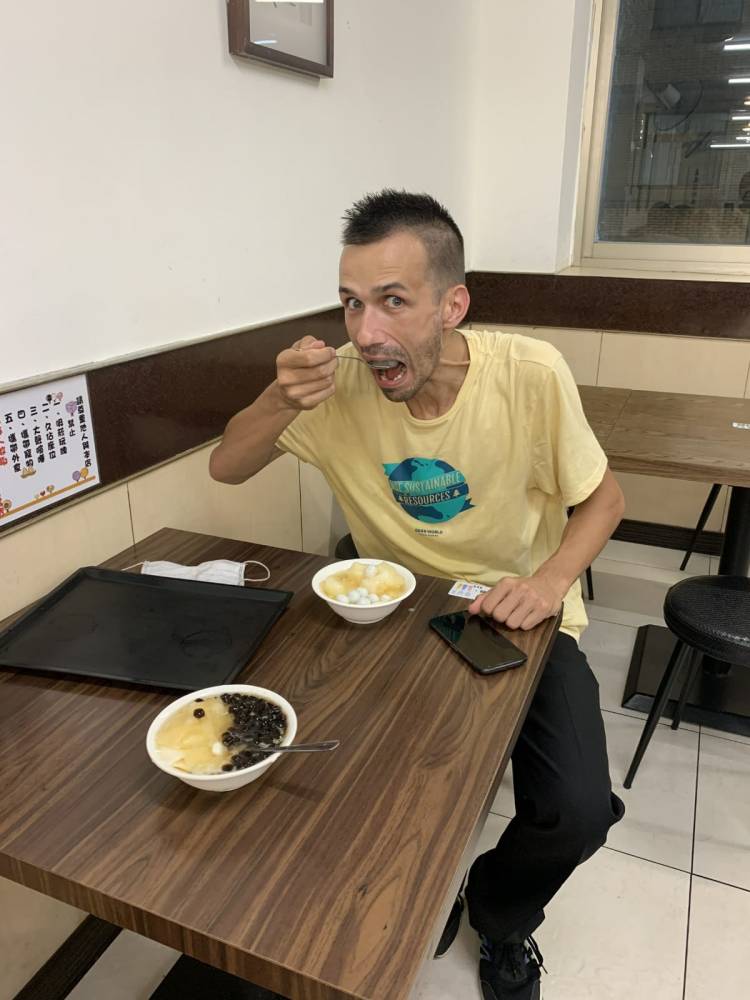
In 台北 Candice showed me a 豆花 (a kind of tofu dessert) near 寧夏夜市 (Ningxia night market). It was really tasty, as you can surely judge from the enclosed picture:
 Back home | © 2003-2021 3Dependent Traveller