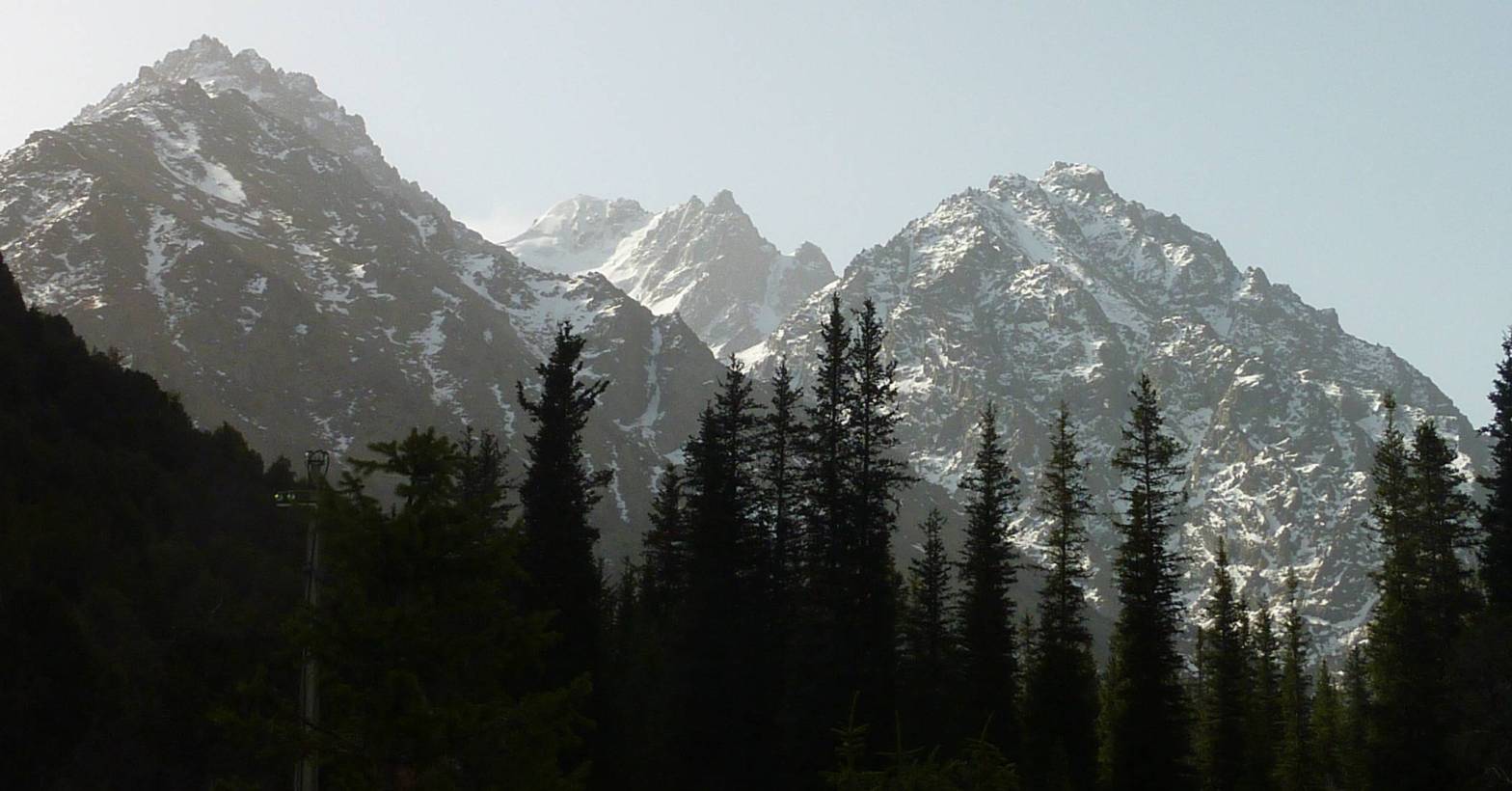
Experiences of certain Семён Семёнович Семёненко while touring Kyrgyzstan, East Turkestan People’s Republic of China, and Tajikistan.
This is going to be rather long — Mauritanian Railways train operator
Saturday, June 27, 2015
6:00 am, 185/44 Chokmorova Street, Bishkek
I set off early morning from my flat the room I had been renting in a shared flat (185/44 Chokmorova St.), my backpack chock full of stuff needed to:
- climb Muztagh Ata
- climb Lenin’s Peak
…among which I could possibly NOT leave out my completely botched, half-finished attempt at a biscuit-cum-pound cake (blame the oven and Kyrgyz low-quality baking ingredients from local supermarkets remaining in the pantry I was suposed to clear out) from the previous evening.
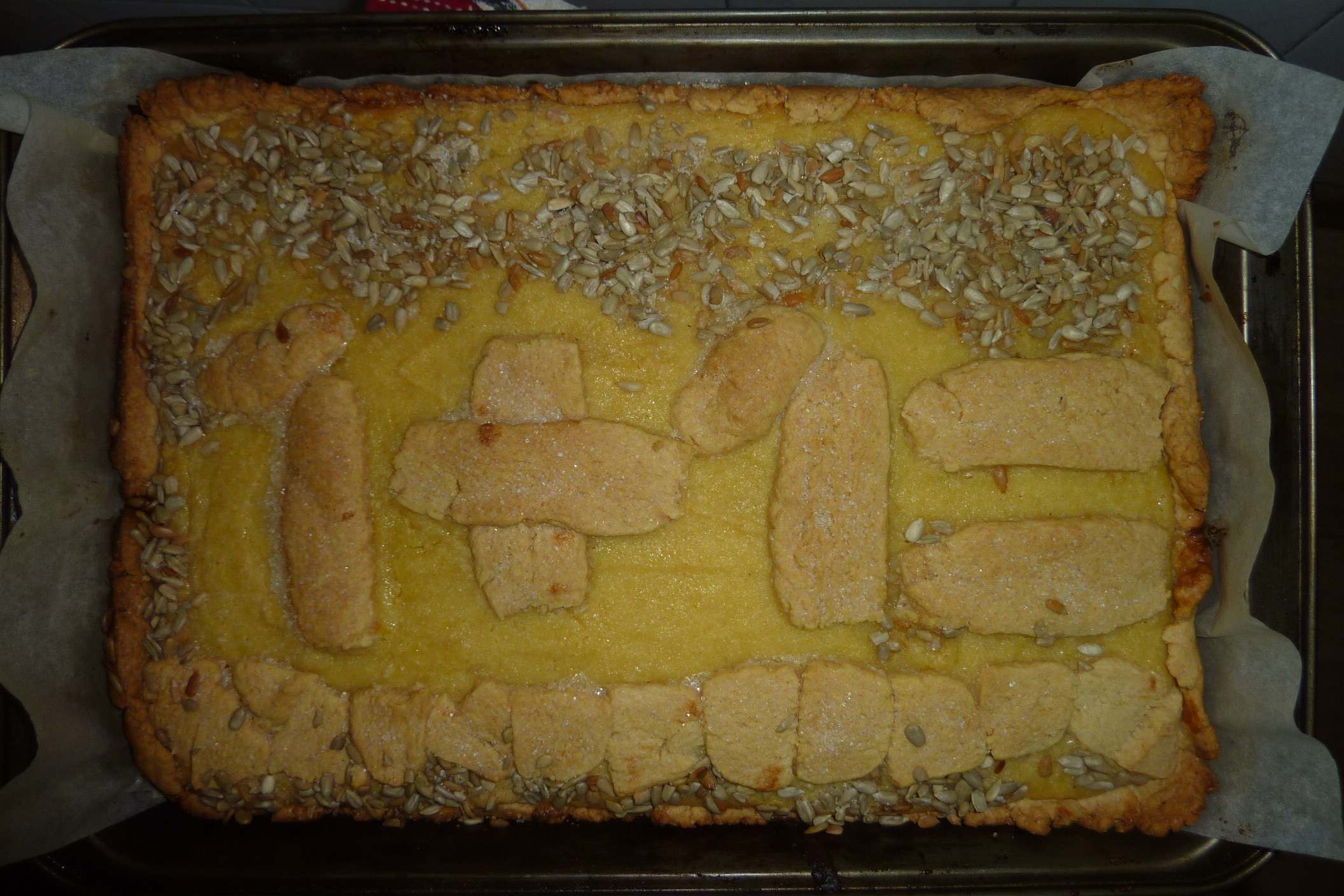
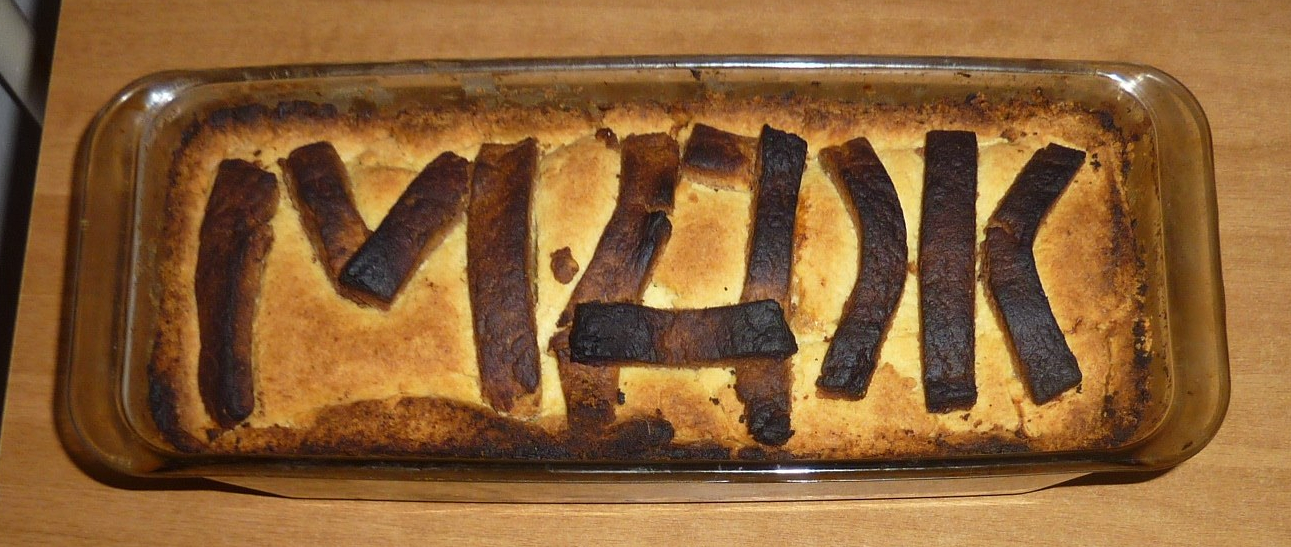
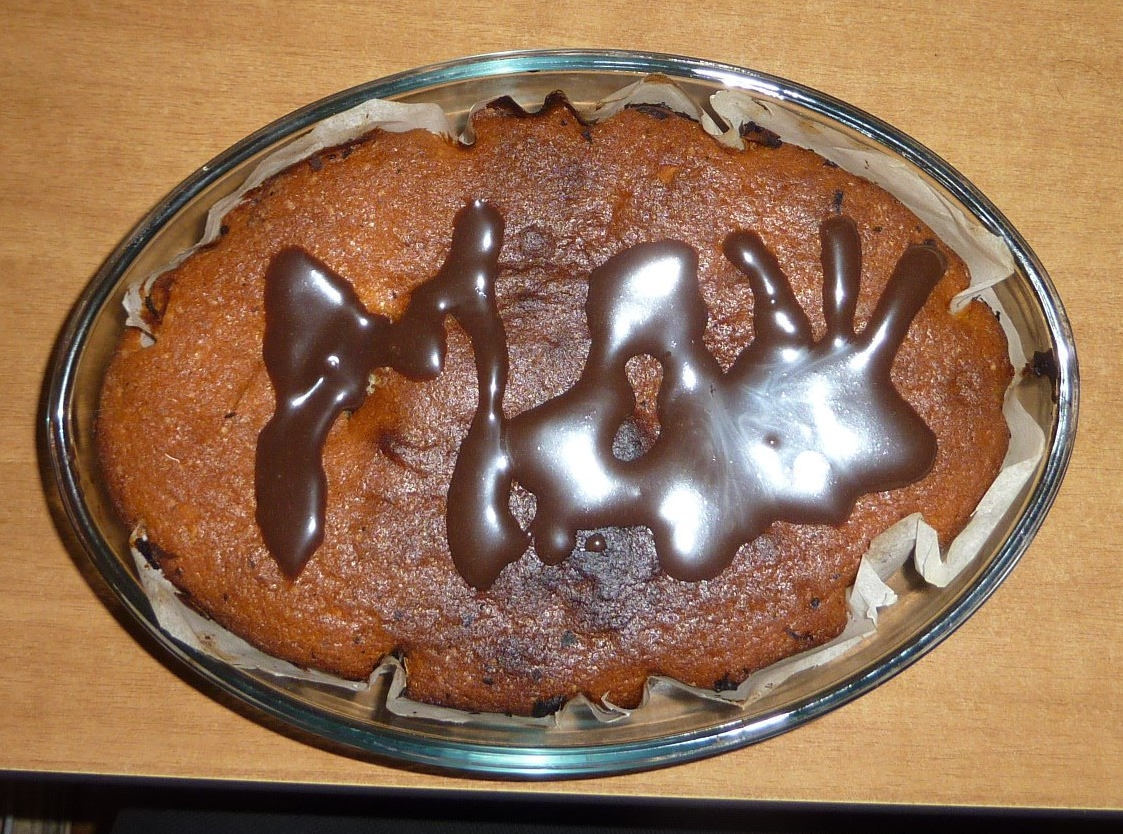
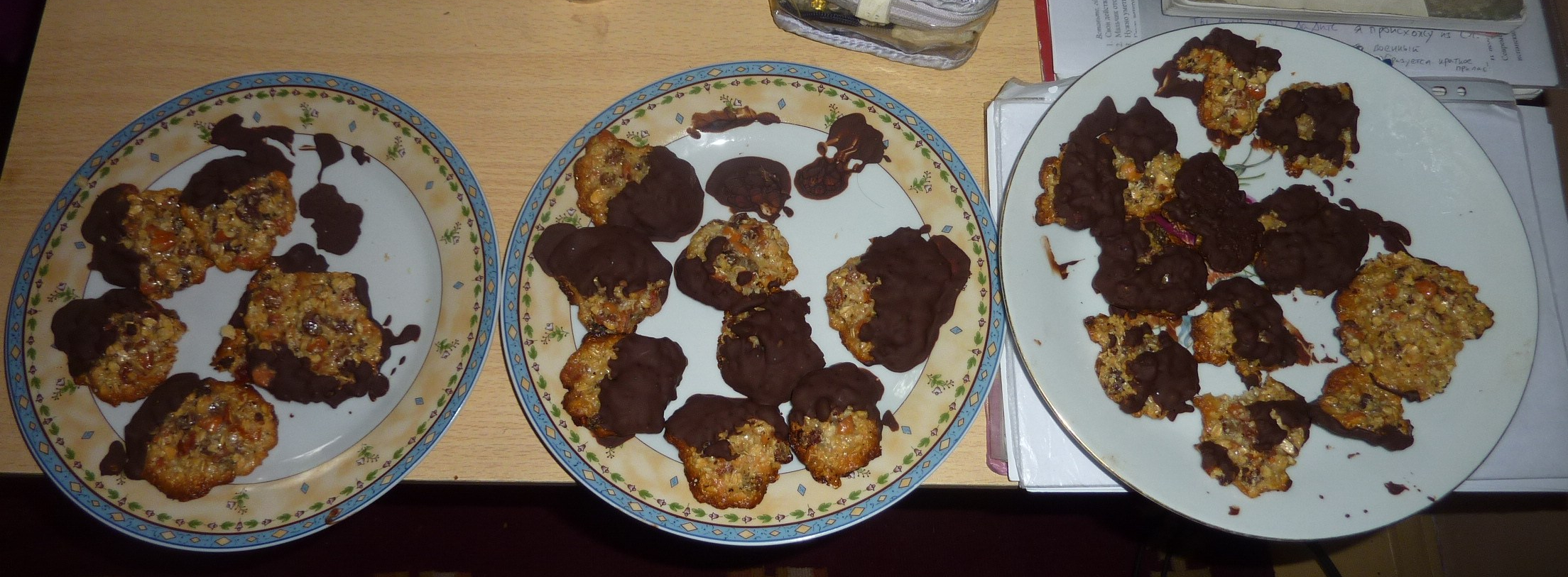
At that moment I really had no idea how indispensably it would serve me us.
My first steps, though, took me to the Issyk-Kul Lake where I was supposed to meet a certain, hm, let’s call him George, so he cannot recognize his real name himself. So this George contacted me through our common acquaintance, certain Mr. Gruber, and he was supposed to travel around Kyrgyzstan for about two to three weeks.
My passport was still at the Chinese embassy and my dear friend Alya (she really is just incidental to this story, but a dear friend nontheless; that’s not her real name, either!) was supposed to pick it up and take it to the university I was teaching at inn order to have them prolong my Kyrgyz visa.
6:30 am, Bishkek II railway station
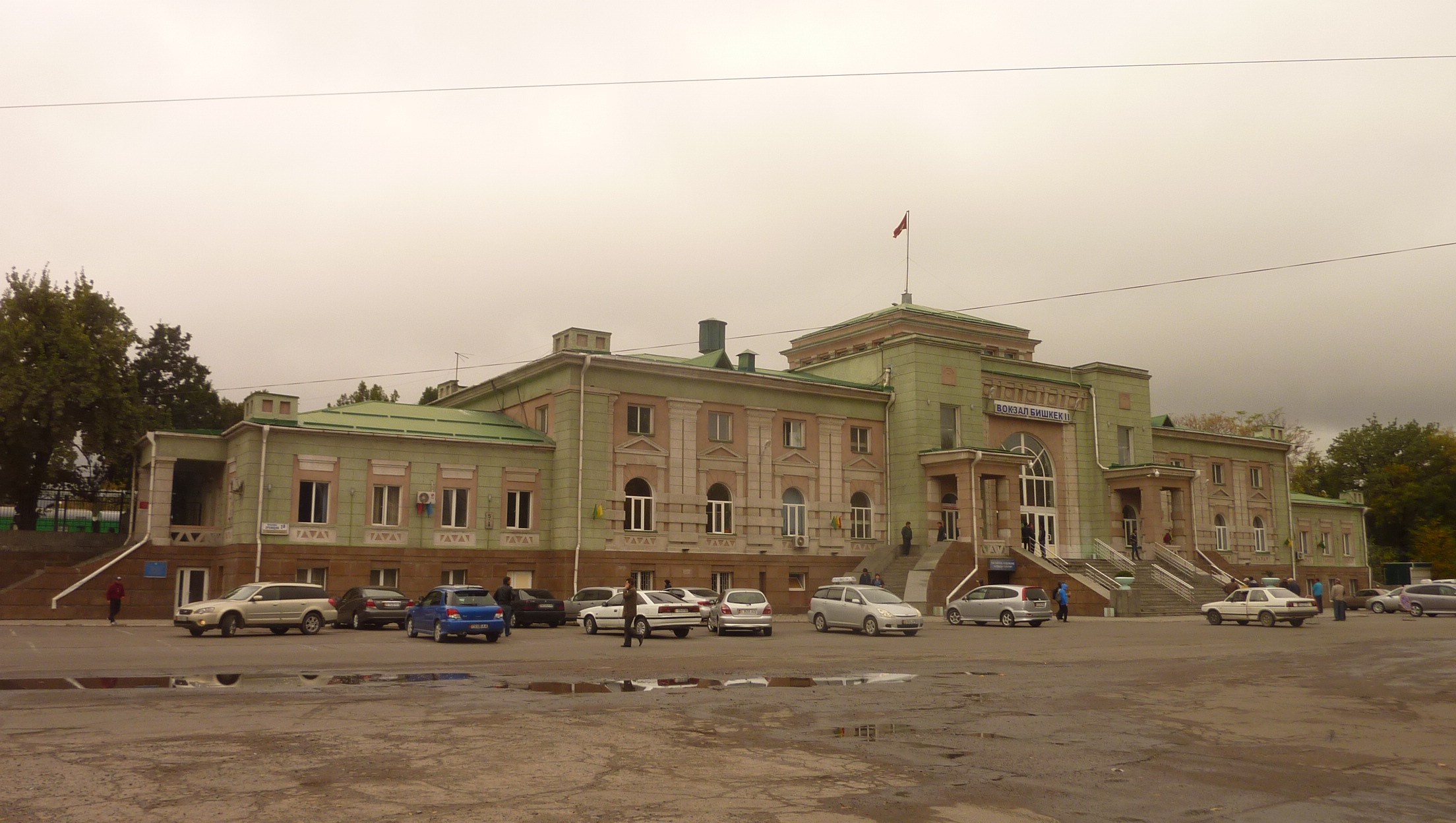
I bought a train ticket to Balykchy, a decrepit sleepy old fishing village on the west bank of Issyk-Kul. It used to be called Rybachye in the communist era (with ryba meaning fish in Russian it could be translated as fishing place) and so it couldn’t have been a more obvious attempt of Kyrgyz authorities to get rid of sometimes painful history of Russian colonization by directly translating the village name to Kyrgyz. At the time of Rybachye it promised modern industrial future. There was a torpedo proving grounds for military submarines and – obviously – a canning factory. It’s all gone now. Fish are gone due to overfishing, Soviet army is gone due to the collapse of U.S.S.R. and tourists never sopped by in the first place. You will also find here a so called „Kyrgyz Iraq“, which is approximately 30 to 40 completely ruined houses and I have no idea as to who destroyed them (or left them in ruins) and why.
But back to the railway station. I bought a ticket for 69 soms (just to give you an idea, $1 was about 60 to 75 soms at that time). The archetypical Soviet lady babushka in the ticket office behind a ridiculously tiny orifice never bothered with the change. I boarded a so-called platskartnyi train, consistingof three carriages and a freshly painted, yet essentially Soviet, diesel engine.
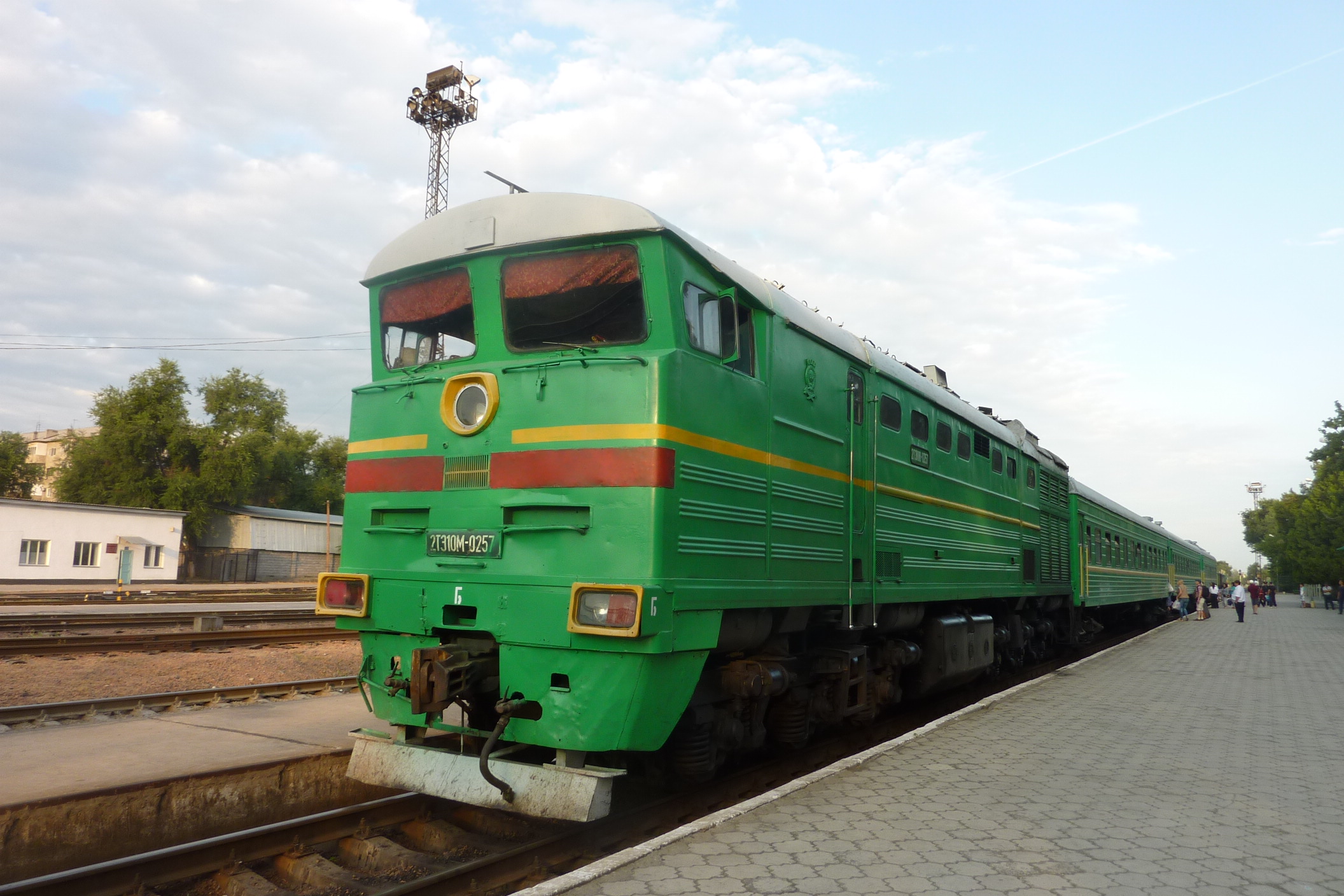
Now at this point I should spend a few words to explain the term platskartnyi. Originally in Russian written as плацкартный, it is what one would technically term a 3rd class carriage (although literally it means ‘reservation-compulsory cariage’)
But not so fast. Yes, it doesn’t travel very fast, yet in every other respect I call it a marvel of Soviet engineering. Why? Why would an economically collapsed regime be capable of producing something so incredibly comfortable, yet cheap and efficient? I don’t know how, but I can attest that these communal carriages give you more personal space than modern western trains (with everyone’s seat being guaranteed by the virtue of reservation) yet they are able to pack up to 81 people per car (when serving as a regular car, so called общий).
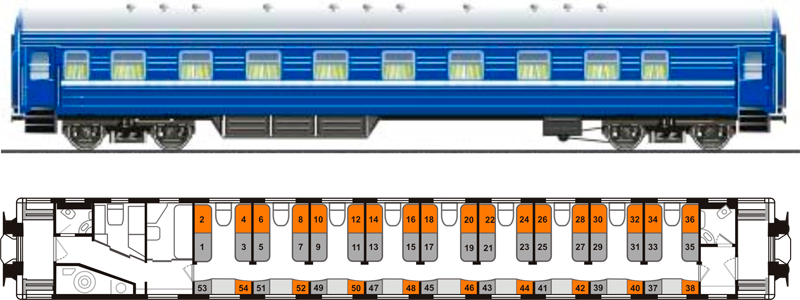
First, all the railways in the former U.S.S.R. are broad gauge. That gives an extra few inches for the carriage designers to work with. So each and every one of these sports long upholstered benches which can easily accommodate three passangers sitting abreast, that is three benches for each ‘compartment’ (though not physically closed off) and there are 9 such compartments, which makes for 81 places during daytime. Now, how can you fit three benches in a compartment or how does it even make sense?
Obviously two are placed across:
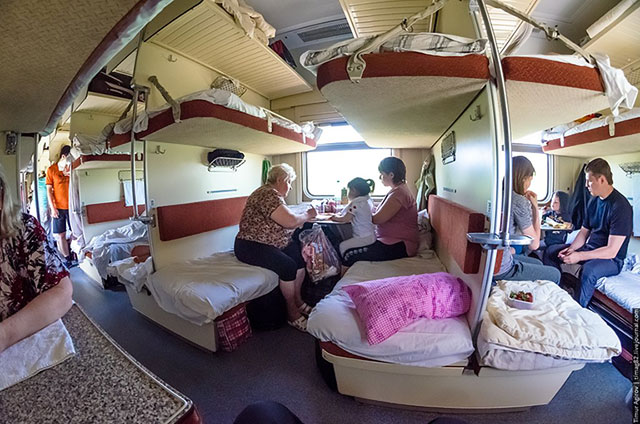
…then there is the aisle and the third runs alongside the aisle (on the opposite side):
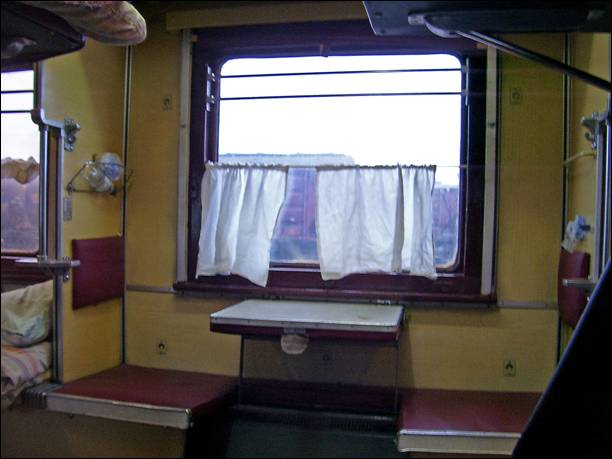
This doesn’t look like a bench, however, the middle table can be retracted by turning it 180° to form a flat bed, so essentially it’s either a bench for three people or two seats at a table – how ingenious!
We’re not done yet.
The other two benches, those across from each other, are also equipped with a large table, so if you have a laptop (or wish to make ramen noodles), it’s all nice’n’easy.
And what about the luggage?
So-o-o much space for luggage. First, there are top bunks which can be folded for more headspace (but even when they are in place you can comfortably sit underneath). You can place your luggage there. Then there are extra luggage racks above which, during daytime, are used for mattresses and pillows, while at nighttime you can store your briefcase or backpacks there. And finally, inside the benches:
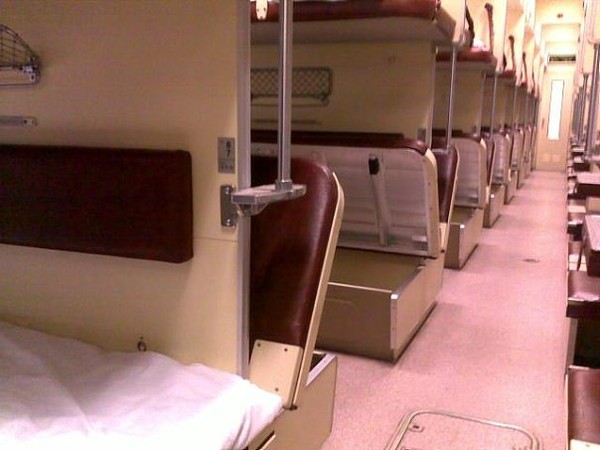
You can open the top upholstered part and fit whatever belongings you have inside (and never ever be afraid of theft – because the thief would first have to wake you up to ask politely: „Sir, may you please open your bed for me?“)
Mind you, I have never heard of any thefts ever happening in these open-plan carriages, nor in the 1st class (Делюкс, meaning De Luxe or мягкий meaning soft with two beds per compartment) or the 2nd class, for that matter (купейный, actually meaning compartment, with four beds each) where you can lock yourself in the compartment with your fellow travelers.
So as you can see, the true miracle comes in the evening. When the carriage transforms into a sleeping car, you flip-turn the two-seats-at-a-table into a bed and other passengers lower the upper three bunks to sleep 6 travelers per compartment at night, that’s altogether 54 per car, with luggage space to spare:
And yes, every night train in post-Soviet space, just like in China, carries a samovar:
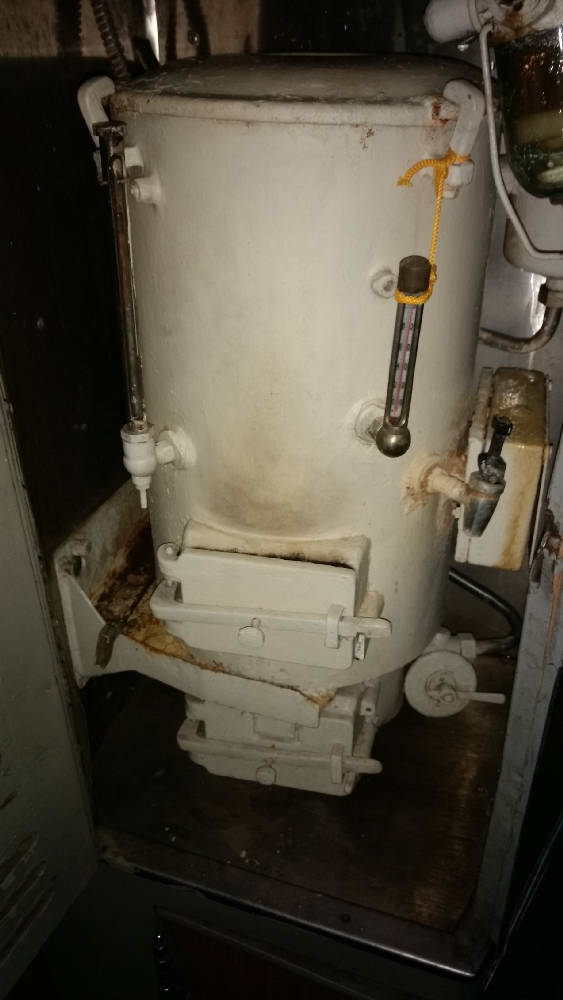
…which is, essentially, a giant kettle always full of boiling water, so you can always have hot tea or soup at any time (or ask for one from the conductor). And since the carriages themselves are are all fuelled by coal (in order to be independent of motive power when it comes to heating – imagine a change of engines in the middle of Siberian winter):
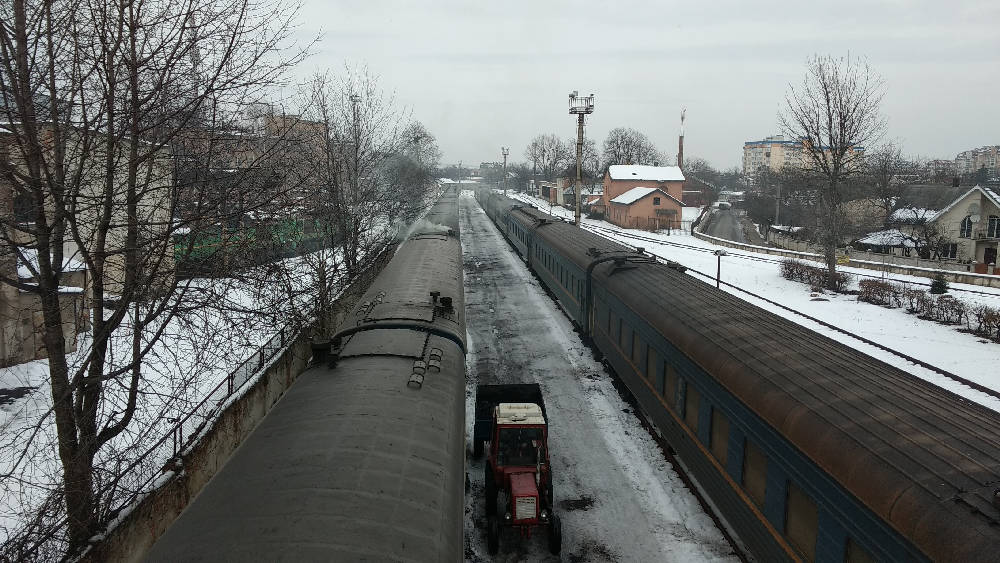
…hot water is available 24/7, essentially a byproduct of keeping these carriages borderline Russian banya (sauna).
Anyway, enough of my rambling, let’s get back on track. The train to Balykchy departed on time (6:42 am) and inched its way towards the destination chugging happily along, with its speed topping out at 50 kph (about 30 mph).
Also, I shouldn’t forget to mention that this is the only domestic trainline in the whole of Kyrgyzstan. It runs exclusively on weekends (one train in the morning, one in the afternoon) and all this just in summer season. The only other trains crossing Kyrgyz territory are international night trains to Kazakhstan and, ultimately, on to Russia, not used for domestic travel.
The train stopped along the way a few times briefly to disgorge random passengers:
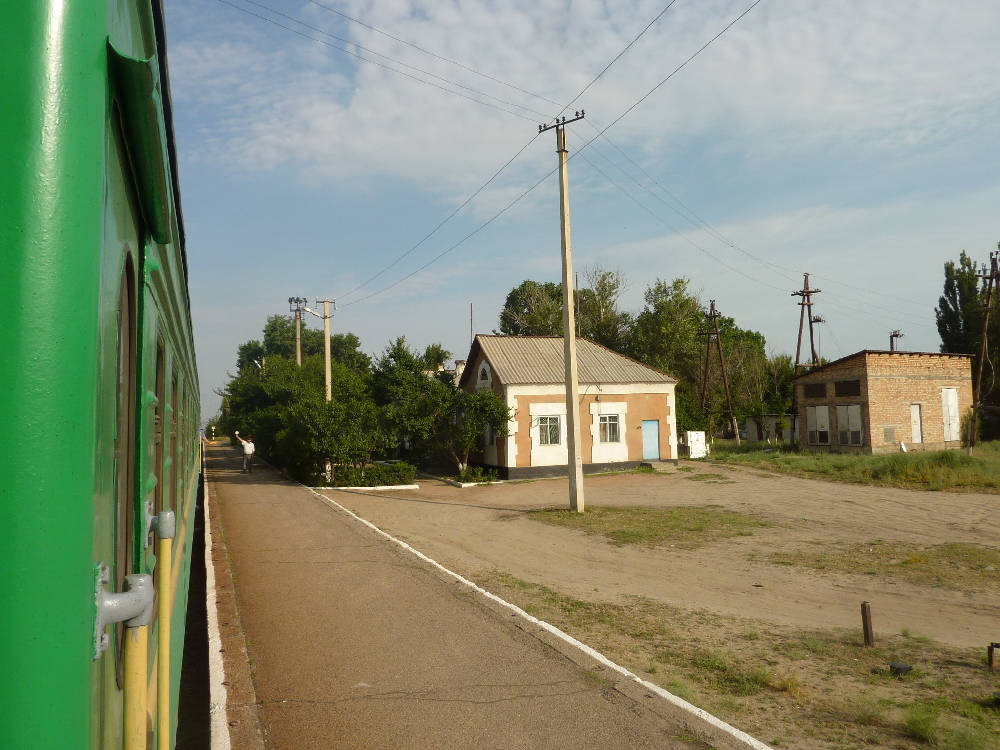
…when suddenly, in one particular station, we remained stranded for half-an-hour:
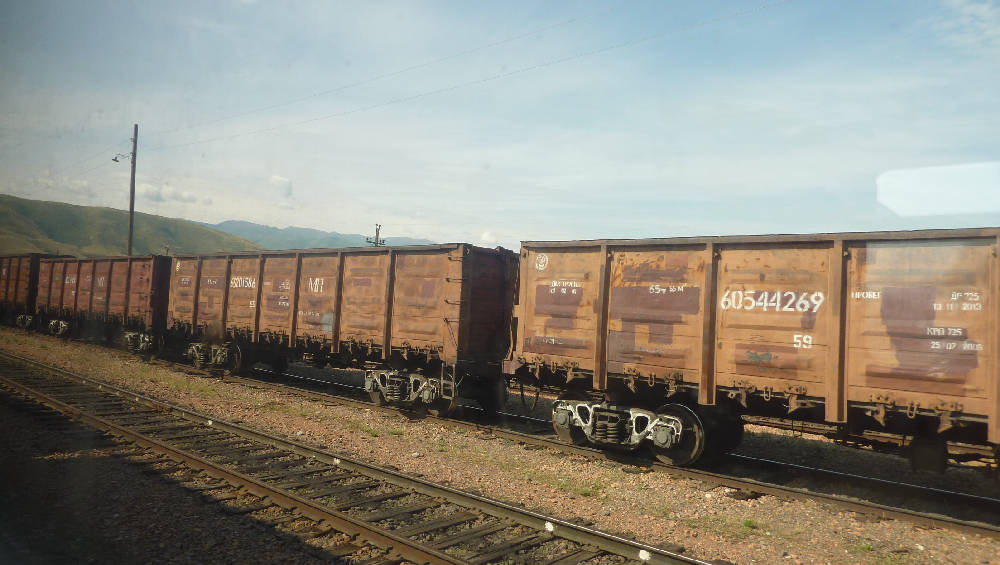
It’s a single track so apparently we were waiting to pass an oncoming train that was running late.
Finally we managed to arrive in Balykchy at half past eleven (less than five hours!), which makes the average speed stunning 30 kph (that is below 20 mph for those from across the pond)! By marshrutka it’s twice as fast (and twice as expensive, even though, one has to admit, Kyrgyzstan has some of the cheapest marshrutka fares in the world).
You don’t know what a marshrutka is? Oh, come on! Marshrutka (better yet, маршрутка) is a mini-van (most often a Mercedes Sprinter, Ford Transit, or Toyota, sometimes a Volkswagen Transporter, depending on the country) converted to transport people, like a bus, just much smaller and negligibly faster.
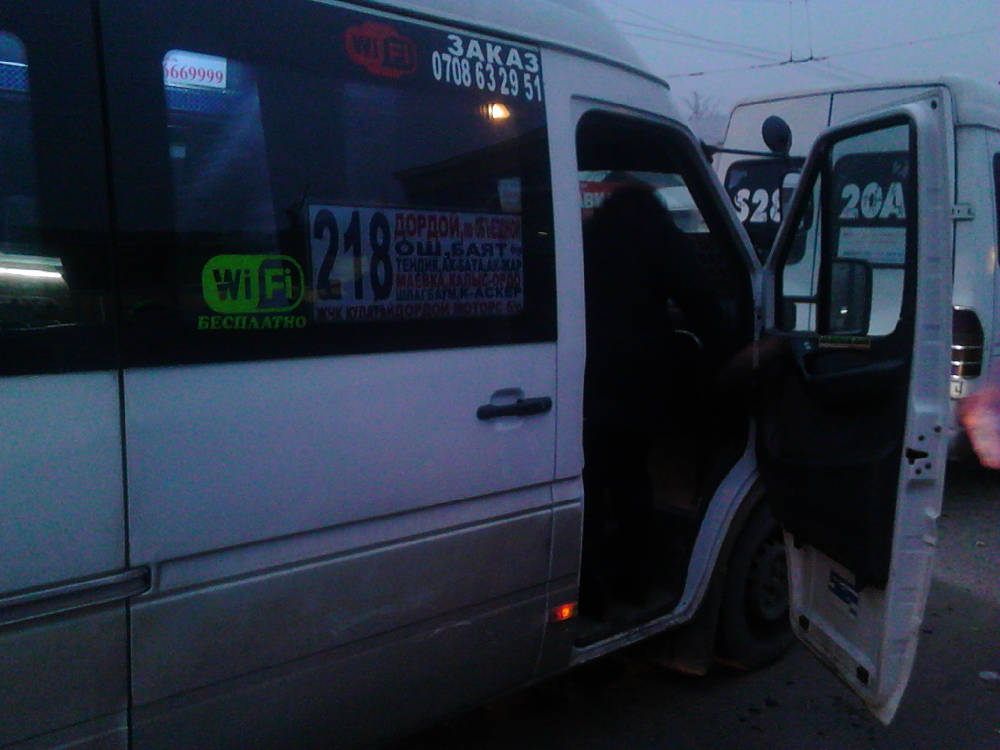
With the only catch being that in the whole of Kyrgyzstan there is one single bus.
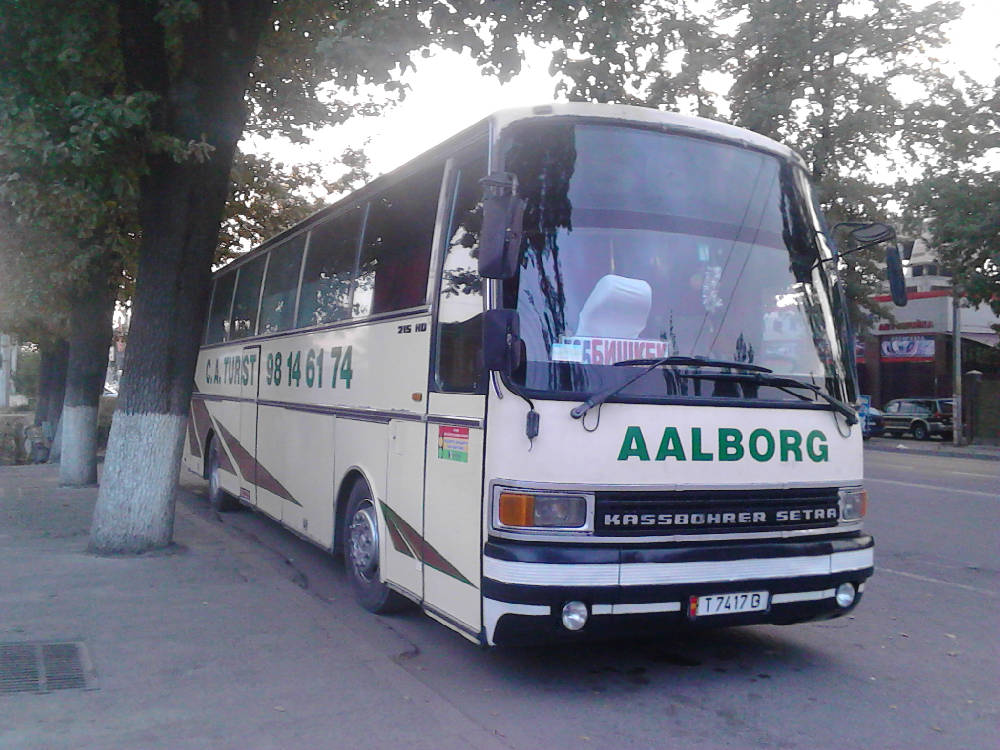
Yes, you heard it right, only one bus, for domestic trips, that is (there are a couple Chinese companies making bus trips to and from Kashgar). And I rode it (you’ll be able to read about it later). All the other transportation is provided by marshrutkas. No trains, no buses. No kidding (no subway, either). Just marshrutkas.
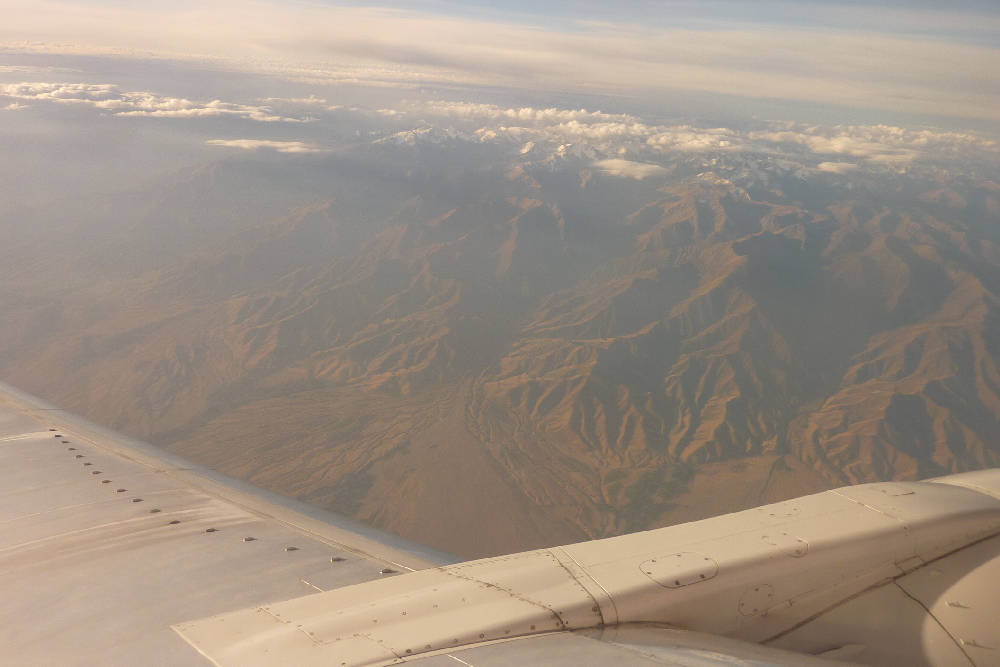
And trolleybuses:
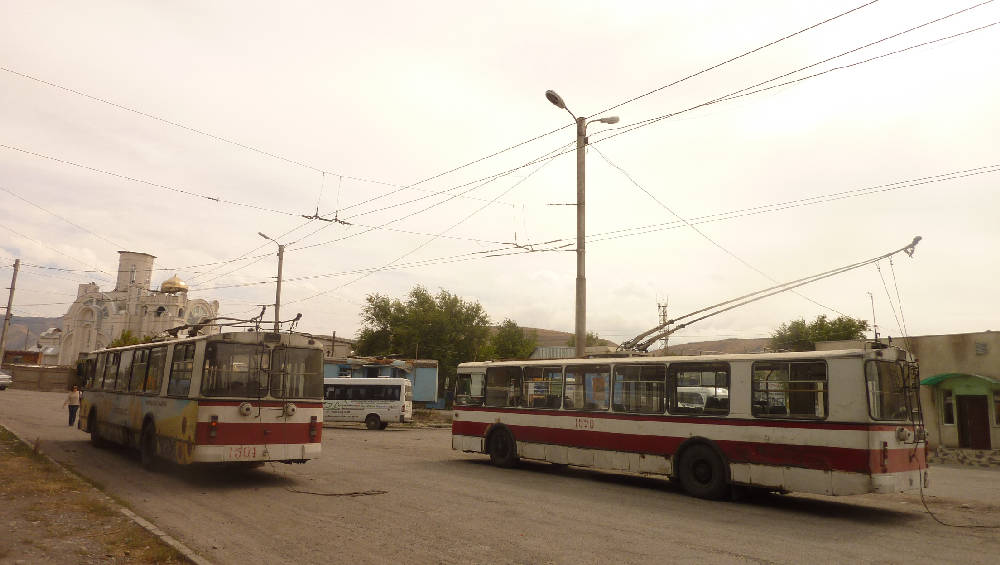
While in many other countries (Georgia or Thailand come to mind) marshrutkas – or minubuses – serve as alternative public transportation to government buses, essentially as a competition branding itself faster (it invariaby fails to perform thus), in reality they are less convenient and more cramped, less frequent while decidedly more expensive. In Kyrgyzstan, however, there’s nothing else, so probably that’s why it’s at the price level of regular large buses, if not lower, in comparison with other countries.
But I digress. Let’s get back on track (literally):
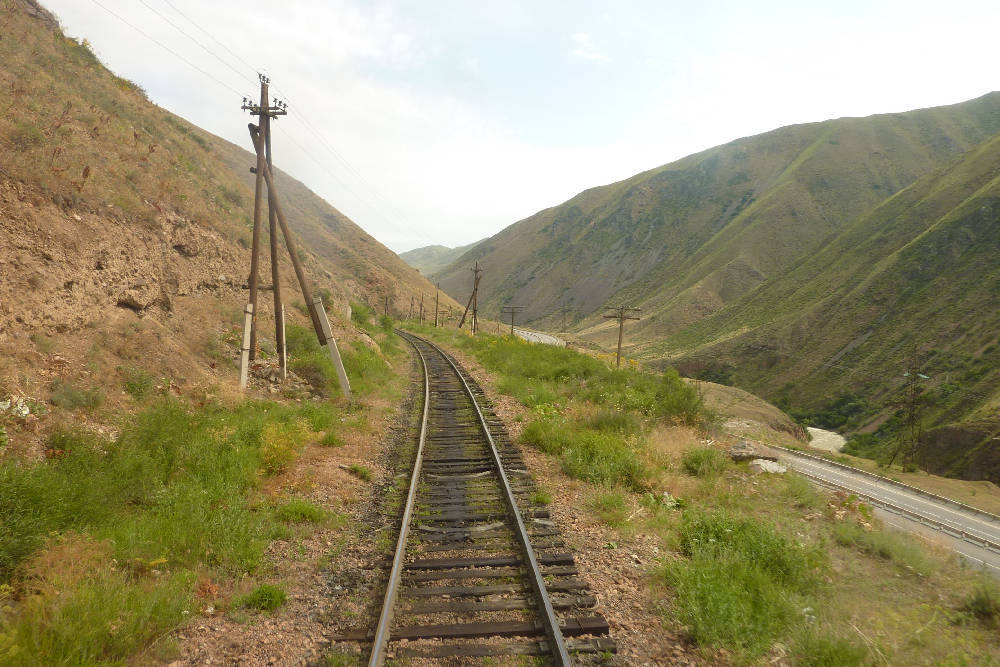
The views alongside are unequivocally less impressive:
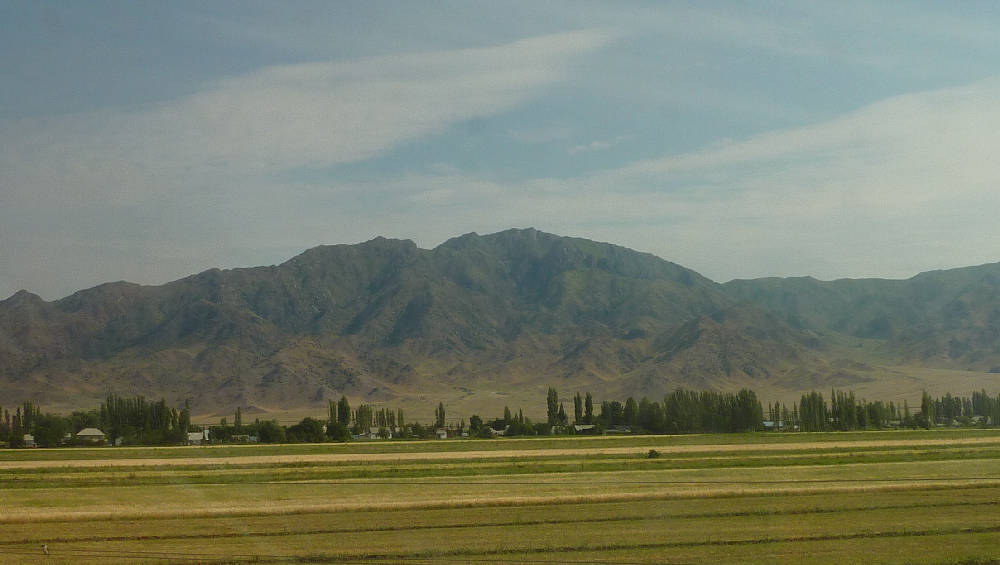
…than they are quirky:
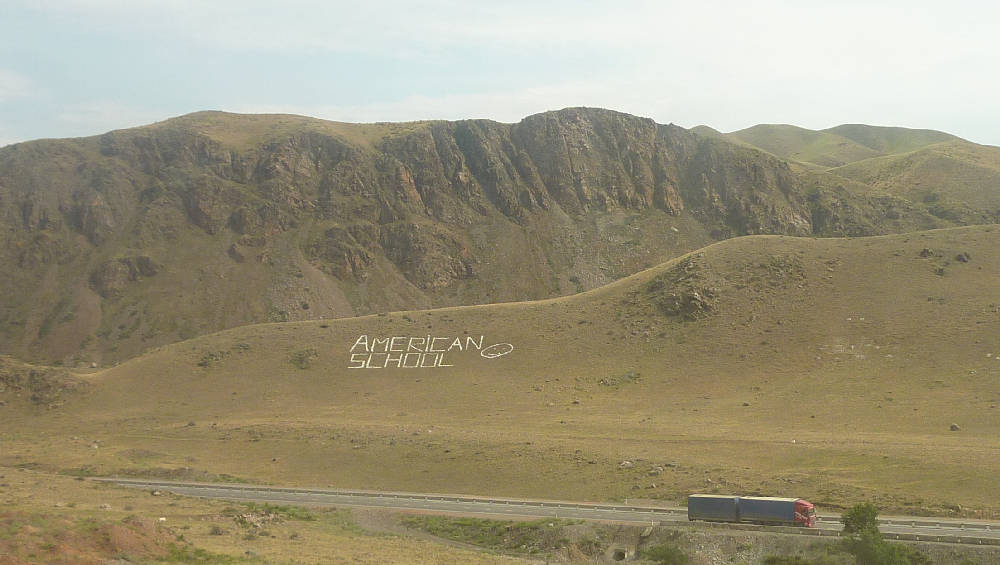
…so I spent the five hours doing everything one can do in a platskartnyi:
- sit and watch the country go by
- lie and ignore the country going by
- sleep
- eat
- drink
- read a book
- solve a crosswords
In short, ‘most everything!
„“ ‘—’
 Back home | © 2003-2021 3Dependent Traveller